SMS Marketing ROI measures whether text messaging campaigns generate more revenue than their total operational and delivery costs.
Rising carrier fees make accurate ROI measurement more important than ever for organizations investing in SMS.
A complete ROI calculation should include platform costs, carrier charges, labor expenses, acquisition costs, and attributable revenue.
High-performing SMS programs typically improve profitability through segmentation, automation, testing, and retention campaigns.
Customer Lifetime Value often contributes more to long-term SMS Marketing ROI than individual campaign conversions.
Organizations that actively monitor costs and attribution models are better positioned to scale SMS profitably.
SMS is great for customer engagement, operational notifications, promotional campaigns, and fundraising, and the reasons that so many businesses have adopted it are pretty easy to understand. Text messages carry an open rate above 98%, with the majority read within three minutes of receipt. That reach is why organizations across retail, healthcare, nonprofits, and professional services are using it.
However, reach on its own doesn’t translate to profitability. A2P (Application-to-Person) carrier fees have risen, and short code registration requirements have added more overhead. Plus, platform costs have shot up alongside feature sets. Thanks to those, the question of whether SMS is delivering a positive return is harder to answer.
SMS Marketing ROI (which just measures text messaging campaign net profitability by comparing revenue generated against total messaging costs) is how you get your answer. Without it, you’re investing in a high-engagement channel and crossing your fingers. With it, you’re making decisions about the channels you use the same way you would for something like paid search or email marketing.
SMS Marketing ROI is a metric, but it’s one you might not be familiar with. What does it measure and what does it influence?
Defining SMS Marketing ROI
SMS Marketing ROI is a financial metric, not an engagement metric. It’s not your open rate or your click-through rate, for instance. Those are inputs that influence ROI, but they don’t make it up.
What It Is: SMS Marketing ROI is a measure of net profitability (the profit you have left over after paying costs). It’s expressed as a percentage of what you spent.
The Definition: SMS Marketing ROI quantifies the profitability of text messaging campaigns by dividing the net revenue generated from mobile text initiatives by the total costs of SMS platform subscriptions, carrier fees, and labor.
SMS Marketing ROI components include:
Customer Acquisition Cost metrics that directly decrease net financial yields when text opt-in subscription costs rise, Marketing Automation tools that reduce operational labor costs and improve overall profit margins, and short code leasing fees that represent a fixed monthly overhead expense impacting total net profit calculations.
However, when done correctly, SMS Marketing ROI outcomes include:
Customer Lifetime Value expansion driven by highly profitable, ongoing automated retention texts that maximize repeat purchases.
Conversion Rate Optimization strategies that directly amplify revenue generation without increasing baseline messaging spend.
A/B testing protocols applied to message copy variants to identify and scale the highest-performing campaigns.
That scope we’re talking about (platform, carrier, and labor) is where most ROI calculations go awry. Organizations that only count per-message costs against campaign revenue usually overestimate their returns.
Why SMS Marketing ROI Matters for Budget Allocation
Marketing budget allocation decisions are comparative. The question isn’t “Did SMS make money?” It’s “Did SMS make more money than what else we could have done?”
ROI gives you a consistent basis for that comparison across channels with very different cost structures and engagement mechanics.
As carrier fees have increased following the rollout of A2P 10DLC registration requirements in the US, the cost side of the ROI equation has grown for most SMS programs. Organizations that weren’t tracking ROI carefully before those changes have found themselves with larger messaging budgets and less clarity on whether the returns justify the investment.
The Difference Between Revenue and Profitability
Revenue attribution and profitability are not the same.
Let’s say you have a campaign that delivers $20,000 in revenue on $18,000 in total costs, and a campaign that drives $8,000 in revenue on $800 in total costs. The first one has positive revenue attribution but only marginal profitability. The second is much more valuable to your business, even though it’s giving you less revenue.
SMS Marketing ROI forces you to look at net profitability (revenue minus costs) instead of just the revenue side.
How SMS Marketing ROI Supports Channel Scaling Decisions
A positive ROI tells you that the channel is working, but it doesn’t tell you how much to invest or how well it’s working. ROI analysis becomes most useful when you use it to tell which campaign types, audience segments, and message strategies give you the highest returns and then plan your budget accordingly. Organizations that optimize for ROI instead of volume usually find that growing a smaller, better-performing program gives them more profit than expanding a mediocre one.
How to Calculate SMS Marketing ROI Step by Step
SMS Marketing ROI has to be calculated accurately, or you’ll make the wrong decisions when it comes to budget planning.
Identify Total Campaign Revenue
Start with the revenue that you can directly attribute to your SMS campaign. Yes, you have to define your attribution model, but the idea is to capture all purchases, donations, or conversions that can be connected to a specific text message or campaign sequence. It looks different for different industries:
For e-commerce, this usually means tracking orders placed within a defined window after a text click (a recipient gets a text, clicks the link, then makes a purchase within a day or two, for instance).
For service businesses, it might mean tracking appointments booked after an SMS follow-up.
For nonprofits, it’s donations received through a mobile giving link.
Calculate All SMS Marketing Costs
You’ll want to include every expense you incurred related to the campaign, including:
Message transmission costs
Platform subscription
Short code leasing and registration
Labor
Subscriber acquisition costs
Apply the SMS Marketing ROI Formula
To get your ROI, use the formula below:
SMS Marketing ROI = [(Revenue Attributable to SMS − Total SMS Costs) / Total SMS Costs] × 100
If your score is above 0%, it means the campaign turned a profit.
Costs are everywhere, but some have a direct effect on your SMS Marketing ROI.
Message Transmission Costs and Carrier Fees
Per-message carrier fees are probably the most visible SMS cost and the one most affected by recent regulatory changes. A2P 10DLC registration in the U.S. was implemented to reduce spam, but it came with registration fees and per-message surcharges that added overhead to most business SMS programs. Current A2P SMS rates usually range from $0.003 to $0.01 per message, depending on carrier, volume tier, and number type. MMS messages carry higher rates ($0.01 to $0.02 per message).
These fees are negligible at lower volumes. However, at 500,000 messages per month, a $0.002 difference in per-message rate means $1,000 in monthly cost ($12,000 annually).
Short Code Leasing and Registration Expenses
Dedicated short codes (those five- or six-digit numbers used for high-volume SMS) are leased from the CTIA through carriers and cost between $500 and $1,000 per month. For organizations running fewer than 50,000 messages per month, toll-free numbers or 10DLC long codes are usually more cost-efficient and carry lower ROI drag.
Software Subscription and Platform Costs
SMS platform subscriptions vary a lot, from $30/month for basic small-business tools to several thousand dollars monthly for enterprise platforms. You’ll need to prorate the monthly platform cost across campaigns based on things like message volume and time allocation to calculate your ROI.
Labor and Campaign Management Expenses
Labor is the most frequently skipped cost in most businesses’ calculations, and it’s the one that’s most likely to make a campaign look more profitable than it is. Every hour spent on list segmentation, message writing, scheduling, compliance review, and performance reporting has a dollar value. For organizations running regular SMS programs, marketing automation cuts this overhead a lot, which is part of why automation usually has such a strong effect on net ROI.
Hidden Fees That Reduce SMS Marketing ROI
Watch for costs that don’t show up on the per-message rate card. That includes things like opt-out management and compliance overhead, number registration and renewal fees, overage charges for exceeding plan limits, and inbound message costs on two-way SMS programs. Compliance costs like maintaining TCPA-compliant consent records, managing opt-out workflows, and handling carrier filtering disputes also affect your margin.
How Customer Acquisition Cost Impacts SMS Marketing ROI
Someone opting into your SMS campaign doesn’t make them your customer. You still need to convert them, and that acquisition comes with costs.
Understanding Customer Acquisition Cost in SMS Programs
Customer Acquisition Cost (CAC) in an SMS context is the total amount to add one opted-in subscriber to your list. That includes any paid promotion (social media ads promoting keyword opt-ins, in-store signage campaigns, lead generation programs, etc), plus the cost of managing the acquisition process (read: labor).
CAC is a component cost that directly decreases net financial yields when opt-in subscription costs rise, especially for organizations running aggressive list-growth campaigns.
Calculating Acquisition Costs Per Subscriber
CAC per SMS Subscriber = Total Acquisition Spend / New Opted-In Subscribers
If you spend $2,000 on a keyword opt-in campaign and gain 800 new subscribers, your CAC is $2.50 per subscriber. That $2.50 needs to be recovered (hopefully several times over) through revenue generated from those subscribers before their acquisition cost contributes positively to ROI.
When Subscriber Growth Hurts Profitability
Growth is good, but rapid subscriber growth can reduce SMS Marketing ROI in the short term. A large flood of new subscribers who haven’t converted pushes down your revenue-per-contact value while driving up your acquisition costs. Organizations that treat list size as the biggest metric in success usually find their ROI numbers declining even as their programs grow.
Balancing Growth and Cost Efficiency
The most cost-efficient SMS programs grow lists through organic acquisition channels, like checkout opt-ins, website keyword capture, and loyalty program enrollment, where CAC is low or negligible. Paid acquisition makes sense when your Customer Lifetime Value projections justify the upfront cost, and not before.
Why Customer Lifetime Value Matters More Than Single Campaign Revenue
While SMS Marketing ROI is important, don’t lose sight of the bigger picture: each customer’s value over their lifetime is much more important than the success (or lack thereof) of any single campaign.
Measuring Customer Lifetime Value from SMS Subscribers
Customer Lifetime Value (CLV) is the total revenue a customer is expected to generate over their full relationship with your business. For SMS programs, the most important question to answer is: what is the CLV of an SMS subscriber, and how does it compare to non-subscriber customers?
In most retail and e-commerce situations, SMS subscribers who get regular messages buy more frequently and at higher average order values than non-subscribers. That’s a direct output of retention campaigns and lifecycle messaging, and it’s largely how Customer Lifetime Value expansion drives SMS profitability.
A welcome sequence that converts a new subscriber into a repeat customer is worth far more to your ROI calculation than the revenue you get from any single campaign message. Retention campaigns (think re-engagement sequences, loyalty rewards, anniversary offers, lapsed-customer win-backs, etc.) generate revenue from subscribers you’ve already acquired, so the CAC has already been absorbed, and every subsequent conversion contributes to net profit at a higher margin.
Repeat Purchases Often Generate the Highest ROI
The most profitable SMS campaign you’ll run is the one targeting customers who’ve already bought from you. They know your brand, they’ve opted in, they have firsthand experience with your offerings, and they convert at a higher rate than cold prospects. Repeat customer campaigns have no acquisition costs, and their transmission costs are low. Their conversion rates are also higher than other campaign types. If you’re not investing in retention relative to new customer acquisition, you’re leaving ROI on the table.
Balancing Acquisition Costs Against Customer Lifetime Value
Not sure how to balance the cost of acquisition against CLV? If your CLV for an SMS subscriber is $150 and your CAC is $3, you have a 50:1 CLV-to-CAC ratio, which is great for scaling acquisition spend. If your CLV is $15 and your CAC is $8, you’re acquiring subscribers who may never return enough revenue to justify the cost. CLV analysis tells you how aggressively you can afford to acquire subscribers and still keep a positive long-term ROI.
SMS Marketing ROI Depends on Conversion Performance
The goal of any campaign is conversion. Without it, your texts are pure costs without any real return.
Conversion Rate Optimization Increases Revenue without Increasing Costs
Conversion Rate Optimization (CRO) is one of the biggest drivers of SMS Marketing ROI because it increases revenue without adding to your costs (either transmission or platform). A campaign that converts 4% of recipients instead of 2% generates twice the revenue at the same spending level.
The conversion rate for SMS campaigns varies by industry and offer type, but retail SMS programs usually have conversion rates between 1% and 5% for promotional campaigns, with highly targeted retention campaigns reaching 10% or higher.
Click-Through Rate (CTR) is the percentage of message recipients who tap an embedded link. It’s also the leading indicator for conversion performance. If your CTR drops, fewer recipients reach your landing page, and fewer conversions follow, regardless of how well the rest of the funnel performs. CTR drops that reduce text-driven traffic directly reduce SMS Marketing ROI and mean that there’s something going wrong with the campaign.
CTR benchmarks for SMS vary, but successful campaigns usually hit 10 to 30% CTR, which is higher than email, where average CTR runs 2 to 5%.
Landing Page Performance Impacts SMS Marketing ROI
A high-CTR campaign that sends recipients to a slow or mobile-unfriendly page loses conversions that your transmission costs have already paid for. Mobile optimization is non-negotiable for SMS campaigns. Your recipients are on their phones, and a landing page that requires pinching or waiting directly affects your ROI numbers.
Common Conversion Bottlenecks That Reduce Returns
The most common bottlenecks in SMS conversion funnels include:
Checkout flows that don’t autofill for mobile users
Offer expiration windows that are too short for the purchase consideration cycle
Generic CTAs that don’t match the specific message offer
Landing pages that aren’t personalized to the segment that received the message
Multi-Touch Attribution Models Improve SMS Marketing ROI Measurement
Getting an SMS recipient to convert sometimes takes more than one message. Multi-touch campaigns help bump your SMS Marketing ROI.
Why Last-Click Attribution Often Undervalues SMS
Last-click attribution gives 100% of conversion credit to the final touchpoint before purchase, but that’s not reality. The problem is that this creates a systematic undervaluation problem: a customer who first encountered your brand through a social ad, got three email newsletters, clicked an SMS campaign link, and then converted through a paid search ad will have that conversion credited entirely to paid search, even though it was actually a culmination of all the touchpoints that got them to purchase from you.
If you’re using last-click attribution on your SMS programs, you’re probably underreporting your ROI and making budget allocation decisions based on inaccurate data.
Multi-Touch Attribution Connects SMS to Revenue
Multi-touch attribution models spread the credit for conversion across multiple touchpoints in the customer journey, which is much more realistic than last-click attribution. When you use it with SMS campaigns, this shows the contribution of text campaigns to conversions that may have been completed on another channel or device. The result is a more accurate picture of what your SMS spend is actually generating.
Tracking Text Clicks Through the Customer Journey
UTM parameters on SMS links are the baseline requirement for attribution tracking. Every campaign link should have unique UTM values that identify the source (SMS), medium (text), and campaign name, so that when you get a conversion, your analytics platform can trace it back to the specific message that drove the click. Without UTM tracking, you’re guessing about SMS revenue attribution.
Choosing the Right Attribution Model for Your Business
Last-click: Too basic, understates SMS contribution in multi-touchpoint journeys
First-touch: Good for measuring list acquisition impact, but ignores nurture campaigns.
Linear: Distributes credit evenly across all touchpoints and is reasonable for most campaigns.
Position-based (U-shaped): Weights first and last touch most heavily; useful for programs where acquisition and conversion messaging are both important
Time-decay: Weights recent touchpoints more heavily; useful for measuring urgency-driven campaigns
There’s no one-size-fits-all model. Choose one, be consistent with it, and compare SMS performance against other channels on the same basis.
Manual work is time-consuming and error-prone. Automation can help.
Automated Drip Campaigns Reduce Labor Costs
Marketing automation tools reduce operational labor costs, which is one of the most variable elements of SMS Marketing ROI. A welcome sequence that sends five messages over three weeks doesn’t need five separate manual sends. Set it up once, and it runs for every new subscriber automatically. The labor cost is part of the setup rather than repeated with each campaign cycle.
Trigger-based messages get sent when a specific action occurs rather than on a scheduled broadcast and consistently outperform batch campaigns when it comes to conversion rate.
An abandoned cart SMS sent 30 minutes after cart abandonment gets to the shopper when their purchase intent is still active.
A renewal reminder sent 14 days before a subscription expires gets there when the decision window is open.
Trigger-based messaging improves conversion efficiency because the timing is driven by the recipient’s actual behavior, not by some arbitrary calendar.
Lifecycle Campaigns Increase Customer Retention
Lifecycle campaigns like welcome sequences, post-purchase follow-ups, loyalty milestones, lapsed-customer win-backs, and re-engagement sequences are how SMS programs build Customer Lifetime Value over time. They’re also among the highest-ROI campaign types because they address customers who’ve already shown purchase intent and carry zero acquisition cost.
Automation helps you cut costs, and that grows along with your subscriber list. At 1,000 subscribers, manual campaign management is still feasible if not advisable. At 50,000, it isn’t, and an unautomated program that requires manual labor investment erodes the ROI gains from volume. Automation lets you grow revenue without increasing headcount proportionally.
A/B Testing Helps Maximize SMS Marketing ROI
A/B testing is probably the most overlooked way to fine-tune your campaigns.
Testing Message Copy
Small copy changes in SMS campaigns give you measurable differences in CTR and conversion rate. Testing a direct discount offer (“20% off today only”) against a scarcity-based message (“Only 48 hours left to get 20% off your next order”) against a social proof variant (“2,400 customers shopped this sale, take 20% off today”) shows you which framing works best for your specific audience. That information can then work in every subsequent campaign at no additional transmission cost.
Testing Timing and Delivery Windows
When you send your SMS messages matters. A promotional text sent at 7 AM competes with someone’s morning routine and commute. The same message sent at noon or 7 PM may hit when a recipient has more attention. Testing delivery windows is one of the best ways to improve CTR without changing anything else about the campaign.
Testing Offers and Calls-to-Action
Offer structure drives conversion rate more than almost anything else. A fixed dollar discount versus a percentage discount versus a free shipping offer versus a gift-with-purchase will perform differently across audiences and purchase contexts. A/B testing offer types against a consistent list segment bumps revenue.
Scaling High-Performing Campaign Variations
A/B testing protocols show you what works for different audience segments. However, scaling is what really increases your overall ROI. A message variant that outperforms by 30% on conversion rate, scaled to your full list on the next campaign cycle, generates 30% more revenue at the same transmission cost. That’s pretty substantial when you factor it in across an entire year of marketing.
SMS Marketing ROI Compared to Email and Paid Advertising
Email and paid advertising should still play roles in your marketing, but how big those roles should be is up for question.
SMS Marketing ROI vs Email Marketing ROI
Email marketing gets billed as the highest-ROI digital channel according to HubSpot and DMA reporting returns around $36 to $42 per dollar spent. SMS programs, when they’re managed the right way, generate higher per-message revenue because the engagement mechanics are fundamentally different: a 98%+ open rate versus email’s 20 to 25%, and a CTR that usually runs 5 to 10x higher than email.
The cost structures differ a lot, however. Email transmission costs are negligible at most volume tiers, but SMS carrier fees are not. That cost difference narrows the ROI gap, and at very high send volumes to less-engaged lists, email’s lower cost can give you better returns than SMS. What does that mean? SMS and email aren’t competing channels. Used the right way, they’re complementary, and the highest-ROI programs use both.
SMS Marketing ROI vs Paid Search Campaigns
Paid search has variable CPCs that respond to things like competition, season, and intent. It also has costs that scale directly with volume. In comparison, SMS marketing has a relatively fixed cost (platform plus per-message fees) that doesn’t increase based on what your competitors are doing. For retention and engagement campaigns targeting existing customers, SMS is almost always better than paid search, which isn’t great for reaching people who already know your brand.
When SMS Delivers the Highest Return
SMS delivers the highest ROI in:
Retention campaigns to existing customers (high CLV, zero CAC)
Time-sensitive promotional offers where urgency drives immediate action
Transactional notifications that reduce support contacts
Re-engagement campaigns targeting lapsed subscribers
These share a common characteristic: they reach people who’ve already opted in and have shown prior intent.
What Does a Good SMS Marketing ROI Look Like?
While there’s no single “good” SMS Marketing ROI we can apply to all industries, we can break it down.
SMS Marketing ROI Benchmarks by Industry
Benchmarks vary a lot by industry, business, list quality, and campaign type. Based on aggregated SMS performance data:
Retail and e-commerce: 500% to 1,500%+ for well-targeted promotional campaigns, and 200% to 500% for broader campaigns
Nonprofits: 300% to 800% for text-to-donate campaigns with a strong donor relationship; lower for cold acquisition
Service businesses: 400% to 1,000% for appointment reminder and booking campaigns
Enterprise programs: ROI is usually lower on a percentage basis but higher in absolute dollar terms due to volume
Strong, Average, and Poor ROI Ranges
Strong: 500%+ = campaign is generating $5+ for every $1 spent; scale aggressively)
Average: 200% to 500% = positive returns, but there’s probably at least some optimization opportunity; audit conversion funnel and costs
Marginal: 50% to 200% = profitable but vulnerable to cost increases; prioritize retention over acquisition
Poor: Under 50% or negative = list quality, attribution, or cost structure needs an immediate review
Factors That Influence ROI Performance
List quality matters more than list size. A 10,000-subscriber list of engaged past customers will outperform a 100,000-subscriber list with low engagement on every ROI metric. Segmentation (nothing more than sending the right message to the right people rather than broadcasting to everyone) is the single best way to jump from “average” to “strong” ROI performance.
When Rising Carrier Fees Become a Problem
A2P carrier fees have increased the base cost for SMS programs. For organizations running high-volume campaigns with modest conversion rates, fee increases can push marginal campaigns into negative territory. The solution? Tighter segmentation (send to fewer people with higher predicted intent), higher-value offers that support conversion rates above 3%, and automate what you can to cut down on manual labor costs. Note: Absorbing rising fees by reducing list hygiene or expanding to lower-intent audiences are bad ideas.
How to Audit SMS Marketing ROI and Identify Margin Leaks
No matter how good your SMS campaign might be, you need to audit it.
Review Platform and Carrier Costs
Pull your last three months of platform invoices and carrier statements. Calculate your actual cost per message, including all fees, and compare it against your plan’s advertised rate. Overages, unexpected surcharges, and underused plan features are some of the most common margin leaks that don’t show up in campaign-level reporting.
Monitor Delivery and Engagement Metrics
Delivery rate drops (messages that aren’t delivered due to invalid numbers, carrier filtering, or opt-out accumulation) mean you’re paying transmission costs for messages that never get to a recipient. A delivery rate below 90% is a sign that you need to do some cleaning. Engagement metrics that have declined quarter-over-quarter (CTR, conversion rate, revenue per message, etc.) show that you’re dealing with either list fatigue, offer quality issues, or attribution problems.
Identify Campaigns With Negative ROI
Run your ROI formula on each campaign type by itself, not just across the program as a whole. A profitable overall program can hide individual campaigns that are consistently losing money, usually broad acquisition campaigns or poorly segmented batch sends. Identifying and eliminating negative-ROI campaign types improves overall program profitability without any additional spending.
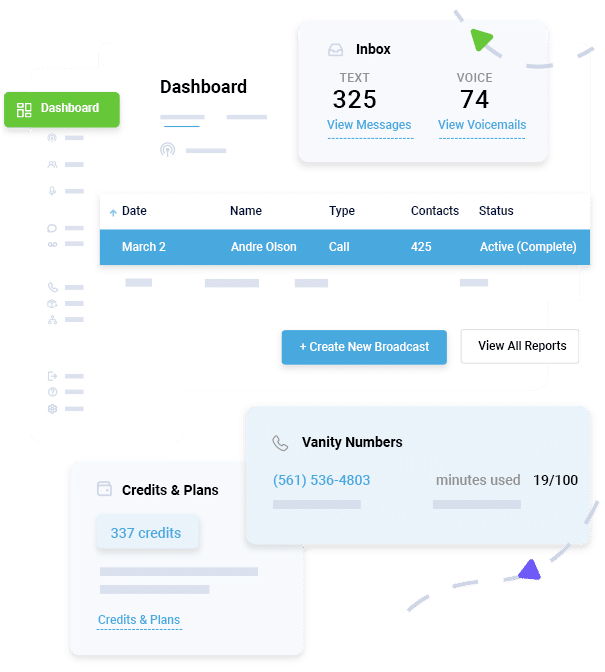
Build an SMS Marketing ROI Dashboard
A functional ROI dashboard needs to track:
Revenue attributed to SMS (by campaign)
Total costs by category (transmission, platform, labor, acquisition)
ROI by campaign type
CTR and conversion rate trends
Subscriber growth and churn
How DialMyCalls Helps Organizations Improve SMS Marketing ROI
You’ll find everything that drives SMS Marketing ROI within DialMyCalls.
Reach large audiences without increasing operational costs.
DialMyCalls’ mass texting capability handles high volumes without increases in staff time or per-message infrastructure overhead.
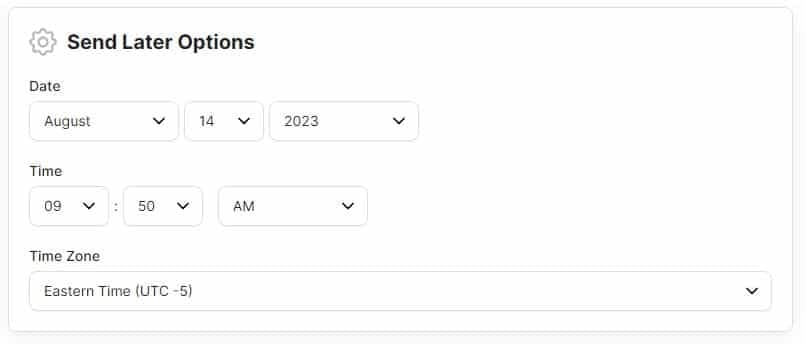
Scheduled sends, drip sequences, trigger-based messages, and recurring notifications run automatically, which reduces labor costs and eliminates the scheduling issues that create inconsistent engagement.
Segment audiences for better conversion performance.
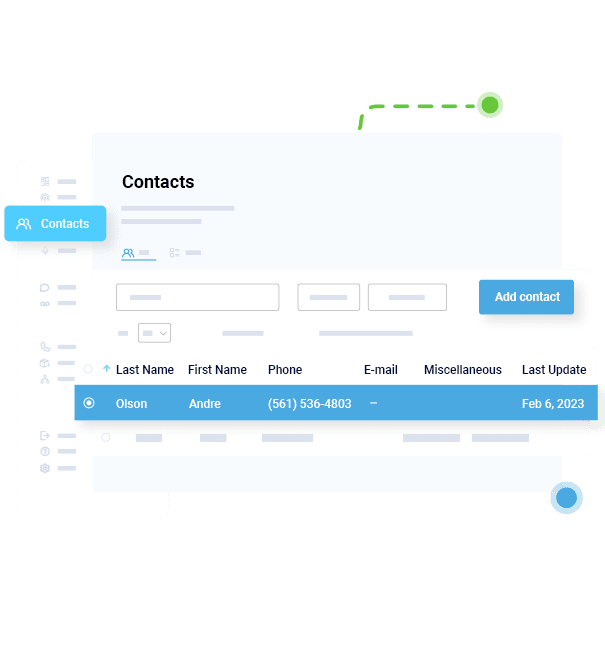
Contact groups let you target by any attribute in your database, from purchase history to geography, account type, engagement level, and everything in between, so campaigns reach subscribers with the highest predicted intent.
Track engagement and campaign results.
Delivery confirmations, response tracking, and campaign reporting give you the attribution data you need to calculate ROI accurately rather than estimating it.
Improve efficiency through centralized communication.
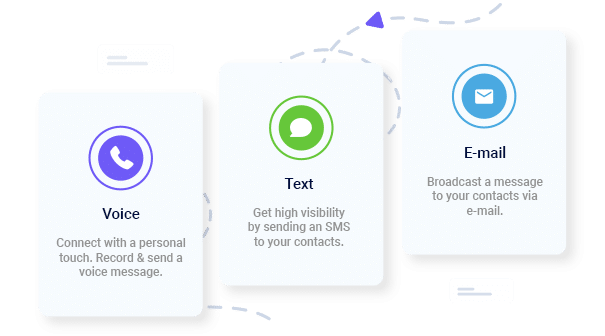
Managing SMS alongside voice broadcasts and email from a single platform reduces the headaches involved with running multi-channel programs, which improves your labor cost efficiency across all three channels.
Scale SMS programs while maintaining cost control.
DialMyCalls lets you scale campaigns during peak periods without locking into plans that don’t make sense year-round.
Want to improve your SMS Marketing ROI? Accurate ROI measurement means that you have to account for all of your costs (including transmission fees, platform subscriptions, labor, acquisition spend, etc.), not just the per-message rate. You’ll also need a consistent revenue attribution model used across everything.
Don’t assume that volume is the be-all, end-all here, either. CLV, CRO, and Marketing Automation do a lot more for your long-term profitability. A smaller, better-optimized program outperforms a larger, poorly measured one, and as carrier fees continue to rise, the margin between those two approaches widens.
Why Your Attribution Model Matters
SMS Marketing ROI calculations are great, but there’s a limitation: they depend on attribution and whether you can connect text interactions to revenue outcomes across different devices and different touchpoints. Multi-touch attribution models give you more accurate results than last-click alone, but no attribution model captures all revenue contributions perfectly.
Frequently Asked Questions
What is SMS Marketing ROI?
SMS Marketing ROI tells you the net profitability of text messaging campaigns. To find it, start by subtracting total SMS costs from campaign revenue. Next, divide by total costs. A positive ROI means you’re generating more revenue than the program costs to run.
How do you calculate SMS Marketing ROI?
[(Revenue from SMS − Total SMS Costs) / Total SMS Costs] × 100. Total costs should include transmission fees, platform subscription, short code or number costs, labor, and subscriber acquisition costs.
What is considered a good SMS Marketing ROI?
A return above 500% ($5 generated for every $1 spent) is considered “strong” for retail and e-commerce programs. Returns between 200% and 500% are positive but could be better. Returns below 100% mean there’s a cost or attribution problem.
How do rising carrier fees affect SMS Marketing ROI?
A2P carrier fees add to your costs without giving you an increase in revenue. As fees rise, the same campaign generates a lower ROI percentage.
How does Customer Acquisition Cost impact SMS profitability?
CAC reduces net profitability when it’s high relative to the revenue those subscribers generate. High CAC makes sense when CLV projections justify the investment, but it’s a problem when subscribers don’t convert at rates enough to recover the acquisition cost.
Why is Customer Lifetime Value important when measuring SMS Marketing ROI?
CLV captures the cumulative revenue a subscriber generates over their full relationship with your business, not just the first purchase. Because SMS programs drive repeat engagement and retention, CLV is a more accurate measure of program value than individual campaign revenue.
How do you attribute revenue to SMS campaigns?
It really depends on the attribution model you’re using. Multi-touch attribution models spread the revenue credit across different touchpoints, which usually gives you a clearer picture than last-click attribution does.
What is the difference between SMS Marketing ROI and email marketing ROI?
Both measure net profitability, but the cost structures are very different. Email transmission is basically free, while SMS has per-message carrier fees. SMS gets better engagement and open rates than email, which offsets the cost difference, but the channels should be used together.
How does Click-Through Rate affect SMS Marketing ROI?
CTR is the best indicator for SMS conversion performance. A lower CTR means fewer people hit your conversion page, which reduces revenue without reducing costs. Better copy or better audience targeting increases revenue at the same transmission cost, which improves ROI directly.
How can Marketing Automation improve SMS profitability?
It’s all about reducing the labor cost involved in SMS ROI by removing manual labor for things like campaign management for recurring sends, trigger-based messages, and lifecycles. It also makes sure that time-sensitive messages get to subscribers when purchase intent is highest.
What A/B Testing strategies improve SMS Marketing ROI?
Don’t go crazy. Test one variable at a time, but confirm statistical significance before calling a winner, which is usually 200+ conversions per variant. Finally, scale it to your full list on the next campaign cycle.
Should businesses use a Short Code when measuring ROI?
Dedicated short codes can be good things for recognition and deliverability, but they’re expensive. For most small and mid-sized organizations, toll-free numbers or 10DLC long codes are probably better options.
How often should SMS Marketing ROI be audited?
Audit monthly for active programs, quarterly at a minimum. Monthly audits catch cost creep and engagement declines early enough to correct before they compound.
What metrics should be included in an SMS Marketing ROI dashboard?
At minimum, including revenue attributed to SMS by campaign, transmission and platform costs, labor costs, ROI by campaign type, click-through rate trend, conversion rate trend, revenue per message, subscriber growth and opt-out rate, and delivery rate. Add CLV and CAC for programs with active acquisition components.
How can businesses improve SMS Marketing ROI without increasing spending?
List segmentation can increase message relevance and CTR. A/B tests help identify higher-converting copy and offer structures. Automation can reduce labor costs per message, and list hygiene eliminates undeliverable numbers that inflate transmission costs without generating revenue.
Maximize Outreach, Save Time
Start Transforming Your Communication with Mass Texting
Tim Smith is the Media Manager at DialMyCalls, where he has leveraged his expertise in telecommunications, SaaS, SEO optimization, technical writing, and mass communication systems since 2011. Tim is a seasoned professional with over 12 years at DialMyCalls and 15+ years of online writing experience.
“I am a youth minister and have spent hours in the past calling students individually to remind them of an upcoming event or to get out an urgent announcement. With DialMyCalls.com, I cut that time down to about 1 minute. I also love how I can see exactly who answered live and how long they listened so I know if they heard the whole message. DialMyCalls.com is the best website I have stumbled upon all year! Thanks!”
Real Results, Real ReviewsOver 40,000 customers trust our platform – and it shows.
4.3
502 Reviews
4.7
836 Reviews
Author
Tim SmithMedia Manager
Tim Smith is the Media Manager at DialMyCalls, where he has leveraged his expertise in telecommunications, SaaS, SEO optimization, technical writing, and mass communication systems since 2011. Tim is a seasoned professional with over 12 years at DialMyCalls and 15+ years of online writing experience.
“I am a youth minister and have spent hours in the past calling students individually to remind them of an upcoming event or to get out an urgent announcement. With DialMyCalls.com, I cut that time down to about 1 minute. I also love how I can see exactly who answered live and how long they listened so I know if they heard the whole message. DialMyCalls.com is the best website I have stumbled upon all year! Thanks!”
Fill out the form below to get a fast custom pricing quote specific for your
organization.Want to speak to our sales team now? Call us at
1-800-928-2086
Thank you!
A representative will be reaching out to you soon.
For immediate help you can call us on
800-928-2086.
Try Out DialMyCalls Now?
Enter a new password and click create account and you'll be able to send 25 test messages now.
Send A Sample Broadcast
We'll send a sample call or text to your phone right now. Remember when you use DialMyCalls you can record your message in your own voice. When the phone rings just pick up and say "Hello" to hear the message.