Reviewed by Saad Z. Asif
|
Updated on September 29, 2026
TL;DR
Set expectations for emergency alerts, maintenance notices, and community updates.
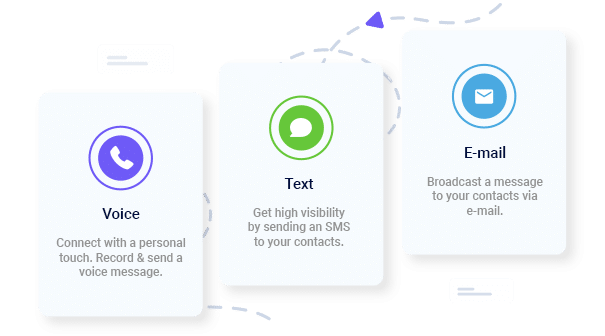
Use voice calls for older residents and people without dependable internet, SMS for urgent actions, and email for detailed information.
Segment contacts by building, urgency, and preferred channel.
Automate routine reminders while keeping emergency and sensitive notices human-written.
Put the action or deadline in the first sentence.
Track delivery, engagement, and resident feedback to improve your strategy.
An effective resident communication strategy combines voice, SMS, and email into one coordinated plan with clear messaging, audience segmentation, automated routine notices, and regular feedback. A multi-channel approach can reduce delivery time from more than 30 minutes to under five minutes and improve compliance with urgent directives by 35% to 50%.
One employee sends an email. Another makes individual phone calls. Someone else posts a notice in the lobby. Residents receive different information at different times, and management has no reliable way to confirm who was reached.
Single-channel outreach can miss 20% to 30% of a resident base. Email-only strategies exclude residents who do not check email regularly or have dependable internet access. Phone-only communication is slow and leaves no written record for lease-related updates. SMS works well for short instructions, but it is not the right format for detailed policies or procedures.
Uncoordinated communication also damages trust. Some residents receive duplicate alerts, while others hear important news from a neighbor before management contacts them.
Vague instructions make the problem worse. If a message does not clearly state the action, deadline, and point of contact, residents may ignore it or misunderstand what they need to do.
A resident communication strategy replaces that guesswork with a consistent process. It defines which channel to use, who should receive the message, when to send it, and how the team will measure the results.
How to Choose the Right Communication Channels for Each Message Type
Voice calls, SMS, and email each serve a different purpose. The right channel depends on how urgent the message is, how much information residents need, and how the audience prefers to communicate.
Use Voice Calls for Emergency Alerts and Safety Notices
Voice calls are a strong choice for water main breaks, power outages, gas leaks, fires, security incidents, and other situations requiring immediate attention.
A recorded voice message provides more context than a short text and can be easier for older residents or people without reliable internet access to receive. Voice outreach can reach more than 85% of residents aged 50 and older and those without dependable email habits.
Voice calls can also support confirmation or follow-up. Residents may be able to acknowledge an alert, connect with the property office, or request help.
Use SMS for Same-Day Notices and Quick Actions
SMS is ideal when residents need to see a short message and act quickly. Industry benchmarks commonly place SMS open rates near 98%, with many messages read within the first few minutes.
Use SMS for:
Same-day maintenance reminders
Rent payment reminders
Move-out instructions
Lease renewal deadlines
Access or parking updates
Short service interruption notices
For example: “Filter change scheduled for Tuesday at 2 PM. Reply YES to confirm or call the office to reschedule.”
SMS also works well for move-out and lease renewal reminders sent seven to 14 days before a deadline.
Use Email for Detailed and Documented Communication
Email is better for policy updates, lease documents, maintenance schedules, service interruption details, community newsletters, and notices that require a written record.
It supports attachments, formatting, and longer explanations that would be difficult to understand through a text or recorded call.
Email also creates an audit trail for communications related to lease terms, property policies, Fair Housing responsibilities, and applicable state landlord-tenant requirements. Put the deadline or required action near the top, then include the supporting details.
How to Segment Your Resident Contact Lists to Reduce Message Fatigue
Not every resident needs every notification. Contact segmentation allows property managers and HOA teams to send relevant information without overwhelming the entire community.
Start by segmenting contacts by building, floor, property section, or service area.
A water main break in Building A should not trigger an alert for Building C. Plumbing work affecting ground-floor units may not require the same notice for residents on upper floors. Targeting affected residents can reduce unnecessary complaints and unsubscribe rates by 25% to 35%.
Next, organize communication by urgency:
Emergency: Voice call, SMS, and email
Urgent, within 24 to 48 hours: SMS and email
Routine, three or more days away: Email first, followed by an SMS reminder when needed
Communication preferences should also be included in resident records. Some residents may request voice calls because of accessibility needs. Others may want SMS for maintenance alerts but prefer email for lease documents. Honor those preferences whenever the situation allows.
Engagement data can help refine your lists over time. If someone rarely opens emails but consistently responds to texts, use SMS for future reminders. If a resident requests emergency-only messages, exclude that person from optional community announcements.
Targeted lists can reduce unsubscribe and spam complaint rates by 40% to 60% compared with broadcasting every message to the entire property.
How to Automate Routine Communications While Keeping Urgent Alerts Human-Written
Automation works best when the message, schedule, and required action are predictable.
Good notices to automate include:
Rent reminders sent five days before the due date
Lease renewal notices sent 90 days before expiration
HVAC filter change reminders
Annual inspection notices
Pest control schedules
Planned amenity closures
Holiday office hours
Automating routine resident communication can save property managers four to six hours per month while improving deadline compliance by 30% to 40%.
Emergency alerts should remain human-written and reviewed. Fires, gas leaks, flooding, water damage, security incidents, and unexpected closures require accurate, property-specific information.
A manager should confirm the location, immediate action, affected area, expected timeframe, and contact information before sending an emergency alert.
Sensitive communications also require a personal approach. Complaint responses, lease violations, and messages involving an individual resident’s circumstances should reflect the specific facts and avoid language that could be misinterpreted.
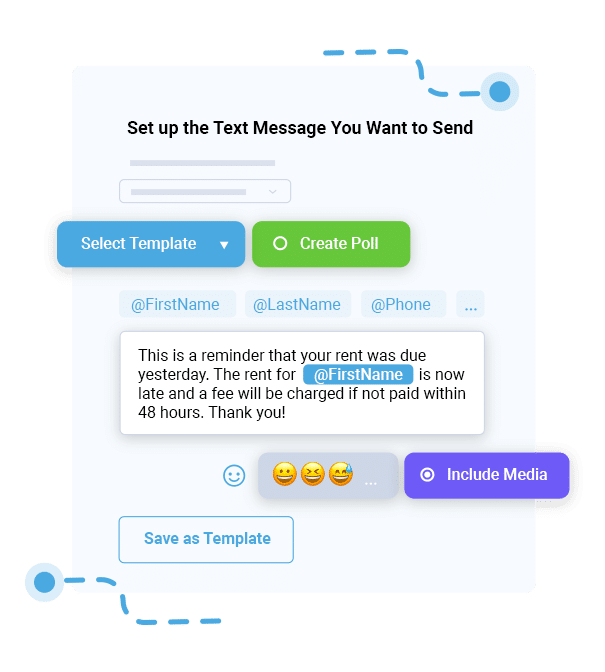
Templates can still speed up the process. Create approved templates for 10 to 15 common situations and add variable fields: “Maintenance is scheduled for [UNIT] on [DATE] at [TIME]. [RESIDENT NAME], call [MANAGER PHONE] to reschedule.”
Templates for HVAC work, plumbing, pest control, amenity closures, and holiday schedules can reduce drafting time from approximately 10 minutes to 90 seconds.
How to Write Resident Messages That Are Clear, Actionable, and Compliant
Residents should understand the purpose of a message after reading the first sentence.
Lead with the deadline, service impact, or required action before providing background.
Instead of: “We are performing routine maintenance on the water system. Please be aware that service may be interrupted.”
Use: “Water service will be off Tuesday from 8 AM to 2 PM for a main repair. No action is needed, and service will return automatically.”
The second version tells residents what is happening, when it will happen, and whether they need to do anything. Clear messaging can improve compliance with urgent directives by 35% to 50%.
Use plain language and avoid property management jargon. Say “Replace your HVAC filter” instead of “Execute the mandatory seasonal HVAC maintenance protocol.”
Every message should also include one direct contact method.
“Call the leasing office at [PHONE] with questions” is easier to follow than listing several departments, email addresses, and office procedures.
Emergency and maintenance notices should be calm, factual, and direct. For lease-related notices, place the deadline and required action first. Add legally required disclosures below the practical instructions so residents do not miss the most important information.
Before sending a critical message, ask another team member to read it. If that person cannot immediately identify the action, deadline, and contact method, revise the message.
How to Measure and Refine Your Resident Communication Strategy
A resident communication strategy should improve over time. Delivery data, engagement metrics, compliance results, and resident feedback show what is working and where communication is falling short.
Start by reviewing delivery rates. If 8% to 10% of emails repeatedly bounce, the contact information may be outdated or the resident may have moved. Follow up through another channel and refresh contact records at least quarterly.
Monitor engagement by channel:
Email open rates below 35% may indicate weak subject lines or poor timing.
High SMS delivery but low click-through may mean the action is unclear.
Unanswered voice calls may signal that SMS or email works better for non-emergency updates.
Compliance below 60% for an urgent request may indicate an unclear deadline.
You should also measure how long it takes to reach the full property. Single-channel outreach may require 30 to 45 minutes. Coordinated voice, SMS, and email broadcasts can reduce that time to approximately two to five minutes.
For critical alerts, review delivery during the first 90 seconds. For routine messages, evaluate engagement over the following 24 to 48 hours.
Collect resident feedback quarterly with a short survey:
Which channel do you prefer for maintenance alerts?
How often should we send non-emergency updates: weekly, monthly, or emergency-only?
Update resident preferences based on the answers. Quarterly feedback surveys can reduce opt-outs and improve trust by 25% to 35%.
You can also test different channels. Send the same non-urgent notice by SMS to one group and email to another. Compare delivery, engagement, and completed actions, then apply what you learn to future communications.
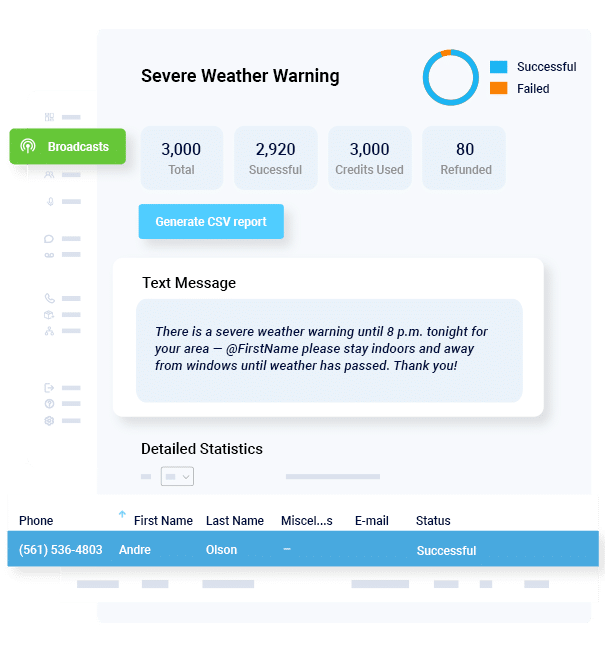
DialMyCalls helps property managers and HOA teams coordinate voice, SMS, and email notifications from one platform. Teams can segment residents, schedule recurring reminders, send urgent broadcasts, and review delivery reports without managing several separate tools.
Resident Communication Strategy FAQs
Should I Send Every Notice Across All Three Channels?
No. Emergency alerts such as fires, gas leaks, and security incidents warrant all three channels. Urgent notices with a 24- to 48-hour deadline should generally use SMS and email. Routine updates three or more days away can begin with email, followed by SMS reminders when needed.
How Often Is Too Often to Contact Residents?
Emergency alerts have no fixed limit because safety comes first. Urgent notices should generally stay below two or three per week per resident. Routine updates may be limited to one or two per month. If monthly unsubscribe rates exceed 5%, review your targeting, timing, and frequency.
What If Some Residents Do Not Respond to Phone Calls or Emails?
Confirm that their contact information is current. Reach out in person or through another channel when appropriate. Some residents may have accessibility needs or strong communication preferences. Document those preferences and use the channels that work best for them.
Can I Automate Emergency Alerts to Save Time?
Emergency alerts should not be sent without human review. A property manager needs to confirm site-specific details, immediate instructions, and contact information. Automation is better for recurring notices with fixed deadlines and standard language.
How Do I Know If My Messages Are Being Read?
Track email opens, SMS delivery or read confirmations, voice call completion, link clicks, replies, and completed actions. If a segment consistently ignores one channel, test another channel or send time.
What Tone Should I Use in Resident Communications?
Use a professional, clear, and direct tone. Emergency messages should be calm and factual. Routine updates can be slightly warmer, but they should still state the purpose and action quickly. Avoid jargon and include one point of contact.
How Should I Handle Residents Who Complain About Too Many Messages?
Listen and adjust. Offer preferences such as emergency-only alerts, a weekly digest, or a preferred channel. Document and honor the resident’s choice. If several residents report the same concern, change the timing, channel, or frequency for that message type.
Tim Smith is the Media Manager at DialMyCalls, where he has leveraged his expertise in telecommunications, SaaS, SEO optimization, technical writing, and mass communication systems since 2011. Tim is a seasoned professional with over 12 years at DialMyCalls and 15+ years of online writing experience.
“I am a youth minister and have spent hours in the past calling students individually to remind them of an upcoming event or to get out an urgent announcement. With DialMyCalls.com, I cut that time down to about 1 minute. I also love how I can see exactly who answered live and how long they listened so I know if they heard the whole message. DialMyCalls.com is the best website I have stumbled upon all year! Thanks!”
Real Results, Real ReviewsOver 40,000 customers trust our platform – and it shows.
4.3
502 Reviews
4.7
836 Reviews
Author
Tim SmithMedia Manager
Tim Smith is the Media Manager at DialMyCalls, where he has leveraged his expertise in telecommunications, SaaS, SEO optimization, technical writing, and mass communication systems since 2011. Tim is a seasoned professional with over 12 years at DialMyCalls and 15+ years of online writing experience.
“I am a youth minister and have spent hours in the past calling students individually to remind them of an upcoming event or to get out an urgent announcement. With DialMyCalls.com, I cut that time down to about 1 minute. I also love how I can see exactly who answered live and how long they listened so I know if they heard the whole message. DialMyCalls.com is the best website I have stumbled upon all year! Thanks!”
Fill out the form below to get a fast custom pricing quote specific for your
organization.Want to speak to our sales team now? Call us at
1-800-928-2086
Thank you!
A representative will be reaching out to you soon.
For immediate help you can call us on
800-928-2086.
Try Out DialMyCalls Now?
Enter a new password and click create account and you'll be able to send 25 test messages now.
Send A Sample Broadcast
We'll send a sample call or text to your phone right now. Remember when you use DialMyCalls you can record your message in your own voice. When the phone rings just pick up and say "Hello" to hear the message.