For years, businesses relied on email-to-text services from AT&T and Verizon to send alerts, notifications, and system messages. A simple email sent to a phone number could trigger a text message instantly. It was fast, cheap, and required almost no setup.
That convenience is gone.
AT&T and Verizon have discontinued email-to-text services for business use, leaving many organizations scrambling to replace a critical communication channel. Internal alerts, emergency notifications, operational updates, and customer messages that once worked quietly in the background now fail without warning.
Businesses can no longer depend on carrier email gateways to deliver time-sensitive messages.
In response, carriers have shifted toward approved, compliant messaging platforms built for application-to-person communication. These platforms offer higher deliverability, better security, and regulatory compliance, but they require a different approach.
We’ll go over the best alternatives to AT&T and Verizon email-to-text in 2026, explain why the shutdown happened, and help you choose the right replacement.
AT&T and Verizon Email-to-Text Has Been Discontinued
AT&T and Verizon have blocked or severely limited SMTP-to-SMS routes. Messages sent through these gateways now fail silently, arrive hours late, or never reach recipients at all. There’s no official support, no service-level agreement, and no troubleshooting path when messages do not deliver.
In turn, businesses face serious operational risk. Yet email-to-text was never designed for scale, compliance, or accountability. Once carriers removed support, organizations lost any reliability they once had. Alerts that need to reach staff right away, like system outages, safety issues, or last-minute schedule changes, can’t really rely on email-to-text gateways anymore.
Why AT&T and Verizon Shut Down Email-to-Text Services
AT&T and Verizon didn’t shut down email-to-text services overnight or without reason.
Abuse and Spam From Open SMTP Gateways
Email-to-text gateways were open by design. Anyone could send an email to a phone number without authentication, identity verification, or rate limits. Over time, these gateways became a major source of spam, phishing attempts, and fraudulent messaging.
Carriers were forced to filter massive volumes of unwanted traffic with no accountability from senders.
Lack of Sender Authentication
There was no reliable way to verify who was sending messages through email gateways. Businesses and malicious actors used the same infrastructure, which made enforcement nearly impossible and exposed carriers to regulatory risk.
No Opt-In Verification
Email-to-text didn’t support consent management. Messages could be sent to any number without confirming user opt-in, which directly conflicted with modern messaging laws and carrier policies.
Conflict With A2P Messaging Regulations
Application-to-person messaging regulations require registration, transparency, and consent. Email gateways bypassed all of these safeguards. As regulations tightened, carriers phased out non-compliant channels.
Carrier Shift to Registered Platforms
AT&T, Verizon, and T-Mobile now require businesses to use registered, carrier-approved messaging platforms. These systems provide accountability, monitoring, and compliance at scale. Email-to-text did not meet those standards.
What Replaced Email-to-Text for Business Messaging
Email gateways were replaced by modern business messaging platforms built specifically for alerts, notifications, and automated messaging. They use carrier-approved SMS routes, meaning messages travel through authorized channels with guaranteed delivery paths. Most require A2P 10DLC registration, which identifies the business, its messaging purpose, and its sending numbers.
Within a purpose-built messaging infrastructure, opt-in management is built in. Recipients must explicitly consent to receive messages, and delivery logs, reporting, and audit trails are standard features. Many platforms also support voice calls, email, and multi-channel alerts, making them suitable for redundancy and escalation workflows.
Maximize Outreach, Save Time
Start Transforming Your Communication with Mass Texting
Choosing a replacement doesn’t have to be complicated. The right platform helps messages reach who they should and keeps everything compliant as you grow.
Carrier Approval: Carriers control what gets delivered on their networks. Any replacement must be approved by major U.S. carriers, including AT&T, Verizon, and T-Mobile. Without it, message delivery is hit or miss.
A2P and 10DLC Compliance: Platforms should support A2P 10DLC registration and ongoing compliance management so your messages won’t be filtered or blocked as spam.
Deliverability Guarantees: Good platforms are transparent about delivery success, retries, and failures.
Reporting and Delivery Logs: Message logs, timestamps, and delivery status reports help keep clear records for audits, troubleshooting, and accountability.
Opt-In Management: Consent management should be built in, not optional. Businesses need tools to manage subscriptions, opt-outs, and compliance records.
Scalability: The platform should keep up with your message volume without glitches or slowdowns.
Multi-Channel Support: Relying on just SMS can be risky. Using multiple channels, like calls, emails, and escalation workflows, adds a safety net for urgent messages.
6 Best Alternatives to AT&T and Verizon Email-to-Text in 2026
Here’s a look at the top replacements businesses use today, along with what they do best and what they could lack.
1. DialMyCalls – Best Overall Replacement for AT&T and Verizon Email-to-Text
Best Use Case
Sending time-sensitive business alerts, internal notifications, emergency messages, and operational updates that must be delivered reliably and compliantly.
DialMyCalls is a carrier-approved mass notification platform built specifically to replace unreliable legacy email-to-text workflows. It’s designed around delivery certainty, regulatory compliance, and speed, making it a strong fit for alerts, internal notifications, and operational messaging.
Where email-to-text failed due to blocked SMTP routes and a lack of carrier support, DialMyCalls operates entirely on approved messaging infrastructure. Messages are sent through registered A2P SMS routes, with automatic fallback to voice calls and email when needed. That means important communications will always reach recipients even when one channel fails.
For teams used to AT&T or Verizon gateways, DialMyCalls offers a familiar alerting workflow without the technical headaches or compliance worries.
Best Features
Carrier-Approved SMS Delivery Built for Alerts
DialMyCalls sends messages through officially approved carrier routes rather than email gateways, reducing filtering, delays, and silent failures. This makes it suitable for time-sensitive alerts where delivery reliability is non-negotiable.
Native A2P and 10DLC Compliance Handling
Business registration, opt-in requirements, and sender validation are handled directly inside the platform. There’s no need to navigate carrier rules manually, and it lowers the risk of message blocking or suspension.
Multi-channel Escalation for Higher Message Reach
If an SMS message is not delivered or acknowledged, DialMyCalls can automatically escalate the alert through voice calls or email. Having a layered delivery approach increases the likelihood that urgent messages are seen and acted on.
Detailed Delivery Tracking and Audit Visibility
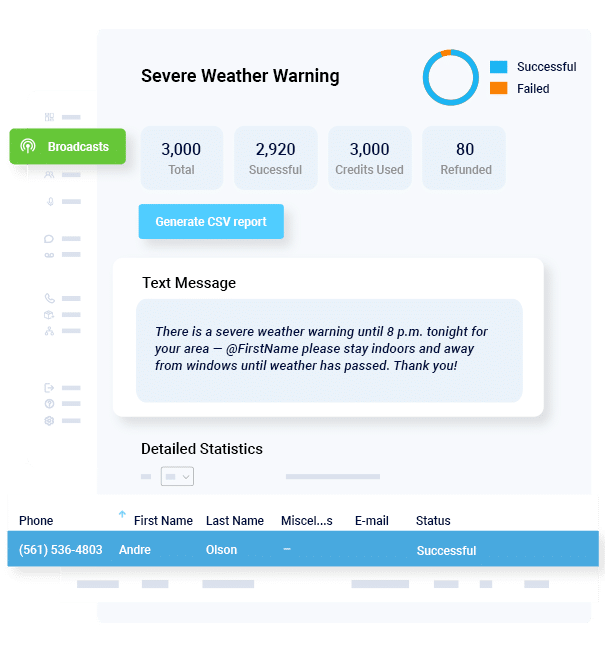
Every message includes recipient-level delivery status, timestamps, and logs. These reports are especially valuable for compliance audits, incident reviews, and internal accountability.
Rapid Deployment with Minimal Operational Friction
DialMyCalls doesn’t require APIs, custom development, or ongoing technical maintenance. Teams can migrate from email to text quickly and begin sending alerts almost immediately.
Designed Specifically for One-to-Many Communication
DialMyCalls stands out as the most complete and lowest-risk alternative to AT&T and Verizon email-to-text in 2026. It doesn’t attempt to be a marketing platform or a developer toolkit. Instead, it focuses on what businesses actually lost when email gateways were shut down: fast, reliable, and compliant alert delivery.
2. Twilio
Best use case:
Engineering-led teams building fully custom SMS and voice workflows directly into applications or backend systems.
Twilio is a programmable communications platform that provides APIs for SMS, voice, and messaging. Instead of a ready-made alert system, it acts as a messaging infrastructure that developers can build on.
Best features
Programmable SMS and voice APIs: Developers can design custom workflows, routing logic, and triggers tailored to specific applications or systems.
Global carrier connectivity: Twilio supports messaging across multiple countries, making it suitable for international applications.
Highly scalable infrastructure: The platform can handle very high message volumes when properly configured.
Flexible integration options: Twilio integrates easily with backend systems, databases, and cloud applications.
Pros
Cons
Maximum flexibility and customization
Requires development and ongoing maintenance
Strong choice for engineering-led teams
Compliance and opt-in logic must be handled manually
Suitable for complex, application-driven alerts
Costs increase quickly at scale
Twilio is powerful but not beginner-friendly. It works best for organizations with in-house developers who need full control. For businesses replacing email-to-text without technical overhead, it may be more than necessary.
3. SimpleTexting
Best use case:
Small to mid-sized businesses sending reminders, internal announcements, and basic notifications without technical setup.
SimpleTexting is a user-friendly SMS platform designed for businesses looking to send messages without technical complexity. It supports alerts, reminders, and basic notifications alongside marketing messages.
Best features
User-friendly dashboard: The interface is intuitive and designed for non-technical users to send messages quickly.
Built-in compliance tools: Opt-in and opt-out handling is managed automatically, helping businesses stay carrier-compliant.
Quick setup and onboarding: Teams can start sending messages with minimal configuration or training.
Clear delivery reporting: Message status and basic analytics are easy to access and understand.
Pros
Cons
Easy to use and quick to deploy
Limited automation and escalation features
Good compliance support out of the box
Not designed for mission-critical alerting
Suitable for reminders and announcements
SimpleTexting is a practical entry-level replacement for email-to-text. It works well for basic notifications but lacks the depth required for critical operational alerts.
4. TextMagic
TextMagic is an SMS messaging platform that supports both local and international messaging with basic automation and reporting capabilities.
Best use case: Organizations that need straightforward SMS alerts and notifications across multiple countries.
Best features
International SMS coverage: TextMagic supports messaging across many countries, making it useful for globally distributed teams.
Simple pricing model: Costs are transparent, which helps businesses forecast messaging expenses.
Basic automation and scheduling: Messages can be scheduled or triggered without complex setup.
Optional API access: Developers can integrate SMS sending into existing systems when needed.
Pros
Cons
Strong international reach
Limited escalation and redundancy options
Easy to get started
Not ideal for large-scale alert systems
Works for basic alerting needs
TextMagic is best for businesses that need straightforward SMS messaging with global reach. It’s less suitable as a full email-to-text replacement for important alerts.
5. EZ Texting
Best use case:
Marketing teams sending promotional messages, announcements, and event updates rather than operational alerts.
EZ Texting is a marketing-focused SMS platform designed primarily for customer engagement rather than operational alerts.
Best features
Template-driven campaigns: Pre-built templates make it easy to launch promotional or announcement messages.
Compliance and opt-in management: Subscriber consent is handled within the platform to meet carrier requirements.
Contact list segmentation: Businesses can group recipients for targeted messaging.
Simple analytics: Basic performance metrics help track message reach and engagement.
Pros
Cons
Easy campaign setup
Not optimized for real-time alerts
Strong for promotional messaging
Limited escalation and delivery controls
Compliance tools included
EZ Texting is better suited for marketing than alerting. It can replace email-to-text for announcements, but not for operational or emergency messaging.
6. ClickSend
Best use case:
Businesses that require SMS, voice, email, and fax messaging across regions and are comfortable with technical configuration.
ClickSend is a cloud messaging platform offering SMS, voice, email, and fax services with API access for integration.
Best features
Multi-channel communication support: Businesses can send messages through SMS, voice, email, and fax from one platform.
Global message delivery: ClickSend supports international messaging at scale.
API-based integrations: Developers can connect messaging to internal systems and workflows.
Scalable infrastructure: The platform is built to handle growing message volumes.
Pros
Cons
Wide range of communication channels
Interface is less intuitive
Strong international capabilities
Alert workflows require configuration
Suitable for integrated systems
ClickSend is a flexible, global messaging platform, but it requires setup and configuration to function as an email-to-text replacement. It works best for teams with technical support.
Email-to-Text Options You Can Count On
AT&T and Verizon email-to-text services aren’t an option for businesses anymore. Carriers are moving toward approved, compliant, registered messaging platforms, which means it’s time to find a reliable alternative.
DialMyCalls makes the switch easy as a complete replacement. It delivers messages through approved channels, supports multiple alert methods, and provides the reliability businesses need in 2026 and beyond.
Email-to-Text Messaging FAQs
Did AT&T and Verizon discontinue email-to-text messaging for businesses?
Yes. AT&T and Verizon no longer support email-to-text gateways for business use. Messages sent through these gateways are blocked or unreliable.
Why does AT&T and Verizon email-to-text no longer work?
These carriers shut down email gateways due to spam abuse, lack of authentication, missing opt-in controls, and regulatory conflicts with A2P messaging rules.
What replaced email-to-text for business messaging in 2026?
Carrier-approved SMS platforms with A2P 10DLC registration, opt-in management, and delivery reporting have replaced email-to-text.
What is the best alternative to AT&T and Verizon email-to-text for business alerts?
DialMyCalls is widely used as a direct replacement for alerts and notifications due to its multi-channel delivery, compliance support, and ease of use.
Can DialMyCalls fully replace AT&T and Verizon email-to-text?
Yes. DialMyCalls provides carrier-approved SMS, voice calls, email alerts, opt-in management, and reporting, making it a full replacement for legacy email-to-text workflows.
Saad Z. Asif is a telecom executive and author with over 27 years of global experience in 3G, 4G, 5G, and IoT innovation. He has held leadership roles at Verizon, T-Mobile, Telenor, and VEON, and advised governments on award-winning telecom policies. Saad is the founder of Galaxy Technology Consulting LLC and author of three books on telecommunications.
“I am a youth minister and have spent hours in the past calling students individually to remind them of an upcoming event or to get out an urgent announcement. With DialMyCalls.com, I cut that time down to about 1 minute. I also love how I can see exactly who answered live and how long they listened so I know if they heard the whole message. DialMyCalls.com is the best website I have stumbled upon all year! Thanks!”
Real Results, Real ReviewsOver 40,000 customers trust our platform – and it shows.
4.3
502 Reviews
4.7
836 Reviews
Author
Saad Z. AsifChief Analyst
Saad Z. Asif is a telecom executive and author with over 27 years of global experience in 3G, 4G, 5G, and IoT innovation. He has held leadership roles at Verizon, T-Mobile, Telenor, and VEON, and advised governments on award-winning telecom policies. Saad is the founder of Galaxy Technology Consulting LLC and author of three books on telecommunications.
“I am a youth minister and have spent hours in the past calling students individually to remind them of an upcoming event or to get out an urgent announcement. With DialMyCalls.com, I cut that time down to about 1 minute. I also love how I can see exactly who answered live and how long they listened so I know if they heard the whole message. DialMyCalls.com is the best website I have stumbled upon all year! Thanks!”
Fill out the form below to get a fast custom pricing quote specific for your
organization.Want to speak to our sales team now? Call us at
1-800-928-2086
Thank you!
A representative will be reaching out to you soon.
For immediate help you can call us on
800-928-2086.
Try Out DialMyCalls Now?
Enter a new password and click create account and you'll be able to send 25 test messages now.
Send A Sample Broadcast
We'll send a sample call or text to your phone right now. Remember when you use DialMyCalls you can record your message in your own voice. When the phone rings just pick up and say "Hello" to hear the message.