Sending an emergency alert is not the same as reaching people.
During emergencies, communication infrastructure is often damaged, overloaded, or partially unavailable. Power outages, network congestion, and physical damage to telecom equipment are common. Yet these are the exact moments when emergency alerts matter most.
For emergency managers, planning for low connectivity is not optional. It is a core requirement of preparedness. Reliable emergency communication depends on redundancy, multi-channel delivery, and real-time visibility into whether alerts are actually getting through using a dedicated emergency notification system for mass alerts.
This guide explains how emergency alerts behave during network outages, why single-channel strategies fail, and how emergency notification systems can be designed to work even when connectivity is limited.
Emergency Communication Must Work When Networks Don’t
Emergencies rarely happen under ideal conditions.
Severe weather, wildfires, earthquakes, active incidents, and infrastructure failures all place enormous strain on communication systems. Power and communications disruptions are consistently identified by federal emergency management and telecommunications agencies, including FEMA and the FCC, as some of the most common secondary impacts during disasters, often compounding the original emergency.
Cell towers may lose power. Fiber lines may be damaged. Internet access may be intermittent or unavailable. At the same time, network congestion increases as thousands or millions of people attempt to call, text, or access information at once.
For emergency management professionals working in government agencies, municipalities, and educational institutions, this creates a critical challenge. Alerts must be delivered during degraded connectivity, not after conditions improve.
Effective emergency communication assumes failure. It accounts for outages, delays, partial delivery, and uneven reach. Planning only for ideal connectivity leaves dangerous gaps when it matters most.
Instant Communication, Whenever You Need It
Send Real-Time SMS & Voice Call Alerts from Anywhere
Network outages during emergencies are expected outcomes of stressed infrastructure.
Severe Weather Damage
Hurricanes, tornadoes, floods, ice storms, wildfires, and earthquakes frequently damage cell towers, fiber routes, and local distribution equipment. According to NOAA, extreme weather events continue to increase in frequency and severity, raising the likelihood of widespread communications disruption.
Power Outages Affecting Cell Sites and ISPs
Most cellular and internet infrastructure depends on grid power with limited battery or generator backup. When power outages extend beyond those limits, service degrades or fails entirely. The FCC’s disaster outage reports consistently show that power loss is one of the primary drivers of communications failure following major incidents.
Network Congestion During Mass Events
During emergencies, call volumes and data usage spike dramatically. In many cases, congestion, not total network failure, is what delays or blocks emergency communications, a distinction frequently noted in FCC telecommunications outage reporting after major disasters.
Rural or Remote Coverage Gaps
Some communities already operate with limited cellular or broadband coverage due to geography, distance from population centers, or minimal network infrastructure. During emergencies, these areas are more vulnerable to service degradation because there are fewer towers, limited backup power, and less redundancy to absorb outages or congestion.
Upstream Carrier or Maintenance Failures
Modern communications rely on interconnected systems. As emphasized by CISA, failures upstream, such as regional routing issues or data center outages, can disrupt communications even if local infrastructure appears intact.
Common Connectivity Challenges That Break Emergency Alerts
Not all emergency alerting methods behave the same way during outages. Understanding the technical behavior of each channel is critical for planning.
SMS Delays During Congestion
SMS text messaging uses a store-and-forward delivery model. When a message is sent, it is first delivered to the carrier’s Short Message Service Center (SMSC). If the recipient’s phone is unreachable or the network is congested, the message is queued and retried until delivery succeeds or the retry window expires.
This behavior is why SMS often succeeds when data-based systems fail. Messages may arrive minutes later, but they often still arrive. However, during extreme congestion:
Messages may be delayed
Delivery order may change
Some retries may time out
This is why SMS should be treated as a resilient but not instant channel. It performs best as part of a multi-channel crisis communication strategy, not as a standalone solution.
Voice Call Failures During Overload
Voice calls rely on available call circuits. During emergencies, call attempts often exceed capacity, resulting in:
Busy signals
Call setup failures
Dropped connections
While voice alerts remain essential for landlines and accessibility needs, they are particularly sensitive to congestion and should be paired with SMS and email.
Internet-Dependent Systems Becoming Unreachable
Many alerting systems rely on continuous internet access to function. During outages, staff may not be able to log into dashboards or initiate alerts at all.
Cloud-based platforms designed for emergency use, like modern emergency notification systems, are better positioned to remain accessible during local outages.
and push notifications require cellular data or Wi-Fi. When data connectivity is lost, these alerts fail completely. Federal emergency guidance consistently cautions against relying solely on app-based alerts for life-safety communication, as they are among the first channels to fail during infrastructure disruption.
Why Single-Channel Emergency Alerts Are a Risk
Relying on a single communication channel creates a critical point of failure during emergencies.
When that channel becomes unavailable, delayed, or congested, alerts may not reach the people who need them most. There is no fallback and limited visibility into who was missed.
Single-channel alerting increases the risk of:
Delayed response and confusion
Missed populations with limited connectivity
False confidence based on “sent” status rather than confirmed delivery
During infrastructure disruptions, even reliable channels can degrade unexpectedly. Without redundancy, emergency managers have few options to adapt once conditions change.
The Core Principle: Redundancy in Emergency Communication
Redundancy means delivering alerts through multiple channels that rely on different network paths and technologies, not simply repeating the same message. Effective redundancy allows emergency managers to:
Reach recipients even when one channel underperforms
Shift emphasis to the most reliable channels under current conditions
Maintain communication as outages and congestion evolve
A redundant alerting strategy typically includes:
SMS, voice, and email delivery
Independent carrier routing where possible
Defined escalation and fallback workflows
By planning redundancy in advance, emergency managers can adjust communication strategies in real time rather than reacting after alerts fail.
Channels That Work Best During Low Connectivity
SMS Text Alerts
SMS does not require internet access and works on basic mobile devices. Its store-and-forward behavior makes it one of the most resilient emergency channels available. This is why emergency texting remains a cornerstone of modern emergency communication for schools, governments, and public agencies.
Voice Calls
Voice calls are effective for landlines and accessibility needs, but they are highly sensitive to congestion. They should complement, not replace, SMS.
Email as a Secondary Channel
Email is best used for follow-up instructions, documentation, and recovery messaging rather than immediate alerts.
Multi-channel Delivery
Using SMS, voice, and email together dramatically improves reach. This layered approach aligns with best practices for community notification systems used by municipalities and public agencies.
Keep Everyone Connected & Informed
Get the Word Out Quickly with Bulk Texting and Voice Calls
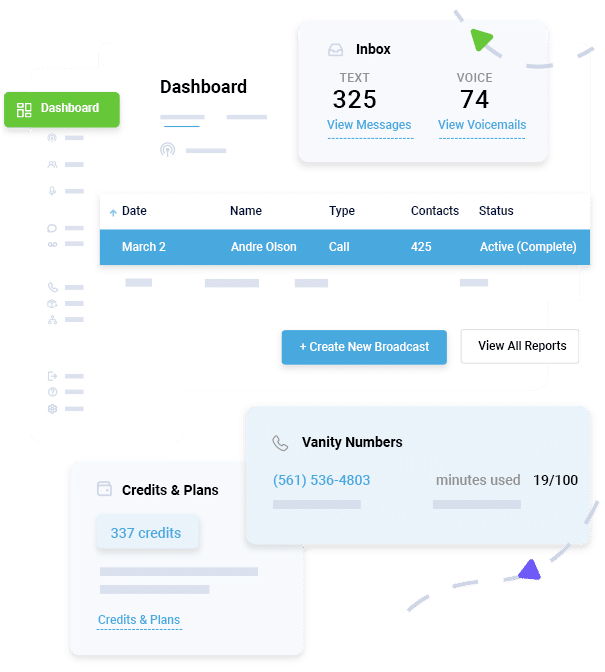
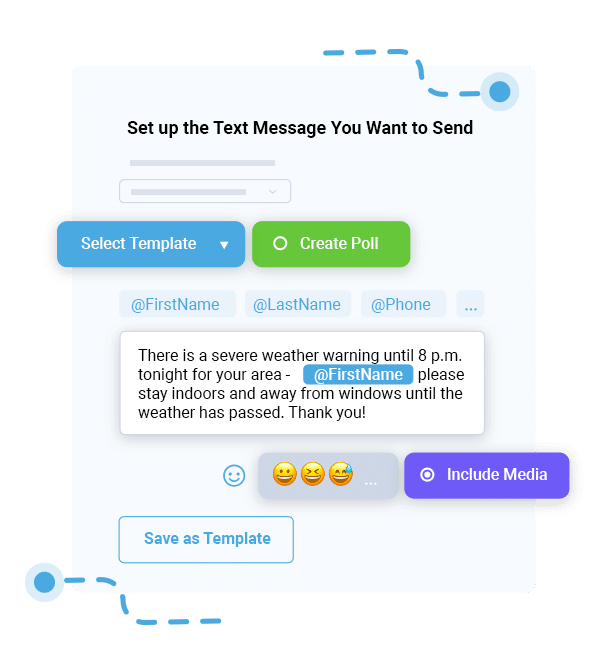
Modern emergency notification systems do more than send messages. They turn alerts into actionable intelligence that emergency managers can use while an incident is unfolding. Instead of treating alerts as one-time broadcasts, these systems provide real-time feedback that helps teams understand what is working, what is not, and what needs to change as conditions evolve.
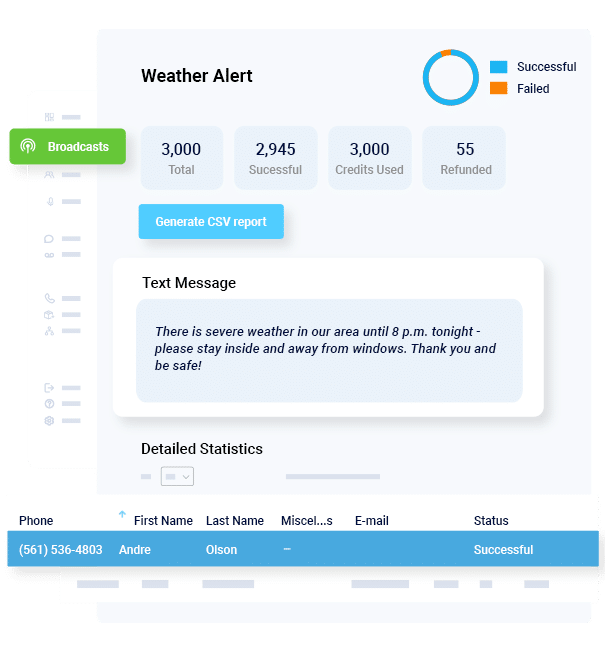
Delivery Analytics Showing Which Messages Succeeded or Failed
Real-time delivery reporting shows how many messages were delivered, delayed, or failed across each channel. This visibility helps quickly identify gaps in reach, such as specific groups, locations, or contact methods that were not reached by the initial alert.
Channel Performance Comparisons
By comparing performance across SMS, voice, and email, emergency managers can see which channels are performing best under current network conditions. If voice calls are failing due to congestion but SMS delivery remains strong, teams can adjust follow-up messaging to prioritize the most effective channels.
Automatic Fallback and Escalation
When delivery issues are detected, modern systems can automatically trigger secondary channels or escalation workflows. For example, if an SMS alert fails or is delayed, a voice call or email can be sent without requiring manual intervention. This reduces response time and minimizes reliance on staff availability during high-stress situations.
Re-Sending Alerts as Connectivity Improves
As network conditions stabilize, systems can reattempt delivery to recipients who were previously unreachable. This ensures that late-arriving messages still reach people who may need updated instructions, status changes, or all-clear notifications.
Common Mistakes Organizations Make During Outages
Even well-prepared organizations make avoidable communication mistakes during network disruptions. Most failures are not caused by a lack of tools, but by assumptions made before conditions deteriorate.
Relying on Apps or Portals Only
Many emergency communication plans rely heavily on mobile apps, dashboards, or web-based portals. These tools often require stable internet access to send or receive alerts. During power outages or data disruptions, staff may be unable to log in or trigger alerts at all, leaving organizations unable to communicate when it matters most.
Not Testing Alerts Under Degraded Conditions
Alerting systems are frequently tested under normal operating conditions, but not during simulated outages or high-congestion scenarios. Without testing under stress, organizations may not realize which channels fail first, how long delays last, or whether fallback mechanisms work as expected.
Assuming Carrier-Level Reliability Is Enough
Emergency managers often assume that mobile carriers will maintain full service during disasters. While carriers work to restore service quickly, outages and congestion are unavoidable during large-scale events. Relying solely on carrier reliability without redundancy creates blind spots when infrastructure is strained.
Lacking a Documented Backup Communication Plan
When primary communication methods fail, teams often improvise. Without a documented backup plan that defines secondary channels, escalation steps, and decision authority, response efforts slow down and messaging becomes inconsistent.
Best Practices for Sending Alerts During Network Disruptions
Reliable emergency communication requires planning for failure, not perfection. The following best practices help emergency managers maintain communication when connectivity is limited or unstable.
Use Multi-Channel Alerting by Default
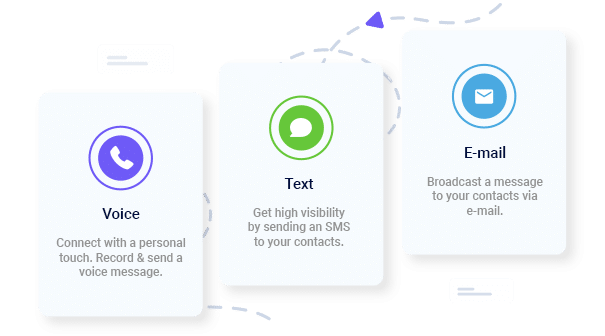
Sending alerts through SMS, voice, and email at the same time reduces dependence on any single channel. If one channel is delayed or unavailable, others may still reach recipients. Multi-channel delivery should be the default approach, not a fallback option.
Prioritize SMS and Voice for Initial Alerts
SMS and voice calls do not require internet access and are often the most reliable channels during outages. Initial alerts should focus on these channels to quickly reach as many people as possible, especially during the early stages of an incident.
Monitor Delivery Reports in Real Time
Delivery analytics provide visibility into which messages were delivered, delayed, or failed. Monitoring this information during an incident allows emergency managers to identify gaps in reach and send follow-up alerts as needed.
Communicate Early and Repeat Messages as Conditions Evolve
Early alerts give recipients time to act, even if details are still developing. As conditions change, repeating or updating messages helps reinforce awareness and ensures new recipients are informed.
Document Failures and Refine Plans
After an incident, reviewing what worked and what failed is critical. Documenting delays, missed deliveries, and channel performance helps improve future response plans and strengthens long-term preparedness.
How DialMyCalls Supports Emergency Alerts During Connectivity Issues
DialMyCalls is designed for emergency communication in real-world conditions, including low connectivity and network disruptions.
Network outages during emergencies are inevitable.
Communication plans that assume perfect connectivity will fail when infrastructure is stressed. Emergency managers must design alerting strategies that account for delays, congestion, and partial delivery.
Redundant, multi-channel emergency alerts improve reach, reduce confusion, and protect communities when it matters most.
Emergency Alerts During Network Outages Frequently Asked Questions
How do emergency alerts work during network outages?
Emergency alerts work during network outages by using channels like SMS and voice calls that do not require continuous internet access. Multi-channel emergency notification systems send alerts across multiple paths at once, increasing the likelihood of delivery when parts of the network are congested or unavailable.
Can SMS alerts be delivered without internet access?
Yes, SMS alerts can be delivered without internet access. Text messages use cellular signaling networks rather than mobile data or Wi-Fi, allowing them to function during outages and degraded connectivity.
What happens to emergency alerts during network congestion?
During network congestion, emergency alerts may be delayed rather than completely blocked. High call volumes can slow delivery, especially for voice and data-based alerts, while SMS messages are often queued and delivered once congestion eases.
Why is multi-channel alerting important during emergencies?
Multi-channel alerting is important because no single communication channel is reliable in every emergency. Sending alerts through SMS, voice, and email reduces single points of failure and increases the chance messages reach people quickly.
How can emergency managers prepare for communication failures?
Emergency managers can prepare for communication failures by using multi-channel alerting, testing systems under degraded conditions, and monitoring delivery reports in real time. Planning for outages ensures alerts can be adjusted when networks are stressed.
Saad Z. Asif is a telecom executive and author with over 27 years of global experience in 3G, 4G, 5G, and IoT innovation. He has held leadership roles at Verizon, T-Mobile, Telenor, and VEON, and advised governments on award-winning telecom policies. Saad is the founder of Galaxy Technology Consulting LLC and author of three books on telecommunications.
“I am a youth minister and have spent hours in the past calling students individually to remind them of an upcoming event or to get out an urgent announcement. With DialMyCalls.com, I cut that time down to about 1 minute. I also love how I can see exactly who answered live and how long they listened so I know if they heard the whole message. DialMyCalls.com is the best website I have stumbled upon all year! Thanks!”
Real Results, Real ReviewsOver 40,000 customers trust our platform – and it shows.
4.3
502 Reviews
4.7
836 Reviews
Author
Saad Z. AsifChief Analyst
Saad Z. Asif is a telecom executive and author with over 27 years of global experience in 3G, 4G, 5G, and IoT innovation. He has held leadership roles at Verizon, T-Mobile, Telenor, and VEON, and advised governments on award-winning telecom policies. Saad is the founder of Galaxy Technology Consulting LLC and author of three books on telecommunications.
“I am a youth minister and have spent hours in the past calling students individually to remind them of an upcoming event or to get out an urgent announcement. With DialMyCalls.com, I cut that time down to about 1 minute. I also love how I can see exactly who answered live and how long they listened so I know if they heard the whole message. DialMyCalls.com is the best website I have stumbled upon all year! Thanks!”
Fill out the form below to get a fast custom pricing quote specific for your
organization.Want to speak to our sales team now? Call us at
1-800-928-2086
Thank you!
A representative will be reaching out to you soon.
For immediate help you can call us on
800-928-2086.
Try Out DialMyCalls Now?
Enter a new password and click create account and you'll be able to send 25 test messages now.
Send A Sample Broadcast
We'll send a sample call or text to your phone right now. Remember when you use DialMyCalls you can record your message in your own voice. When the phone rings just pick up and say "Hello" to hear the message.