Road construction and unexpected closures are some of the top frustrations for residents in cities and towns across the country. Whether it’s a major thoroughfare blocked because of a water main break or a routine street maintenance project, interruptions like these cause traffic headaches and usually mean plenty of complaints to local government offices.
Thankfully, modern technology gives you a solution: text alerts. With SMS notifications, local governments can communicate directly with residents. That helps you eliminate confusion, minimize congestion, limit the impact on people’s commutes, and reduce the number of complaints you get.
Text alerts deliver instant updates and clear instructions, and keep communities informed, even in last-minute situations or emergencies.
Why Roads Close and Why It Frustrates Commuters
Picture this: it’s Monday morning, you’re running late for work, and suddenly your usual route is blocked by a construction barrier or flashing hazard lights. It wasn’t closed on Friday, you weren’t expecting it, there’s no clear detour, and your GPS is sending you on a wild goose chase. Frustrating, right? Unfortunately, this scenario is all too common.
Common Causes of Road Closures
Roads close for any number of reasons and can stay closed for hours, days, or even weeks.
Planned Construction & Maintenance
Cities and towns are always improving infrastructure (think fixing potholes, repaving roads, repairing bridges, or installing new traffic signals). While these projects are definitely necessary, they often mean that commuters have to deal with lane reductions or full street closures. Even when the work is scheduled ahead of time, a lack of clear communication can mean that commuters have to guess which routes are safe or open.
Emergency Repairs
Sometimes, the road itself is the problem. Storm damage, water main breaks, gas leaks, or electrical failures can force an immediate shutdown. These types of unexpected closures are important for public safety, but without instant alerts, drivers get caught in traffic jams.
Accidents & Incidents
A simple fender-bender or downed tree can create delays that ripple outward from the scene. Even minor accidents can block lanes, trigger detours, and turn a 15-minute commute into a 45-minute ordeal.
Weather-Related Events
Heavy rain, high winds, snow, ice, and other weather-related events can make roads unsafe (or impossible to traverse. Drivers who aren’t notified in advance may find themselves stranded or taking risks to get where they need to go.
Special Events
Parades, conventions, street festivals, and road races can temporarily close streets. These may be predictable, but without clear communication, area residents and commuters usually find themselves stuck in traffic with no easy escape.
Road closures do more than inconvenience your residents. They disrupt routines, stress out drivers, make accidents more likely, and even have financial consequences.
Longer Commutes: Even short detours can add minutes or even hours to daily travel. Missing meetings, late school drop-offs, and missed appointments become a real possibility.
Traffic Congestion: One closure can create backups across multiple streets. Beyond congestion, that can lead to shorter tempers and drivers taking unsafe shortcuts.
Stress and Uncertainty: Not knowing why the road is closed or how long it will last increases anxiety, and commuters feel powerless and frustrated.
Economic Impact: Extra fuel, wasted time, missed appointments, and delayed deliveries all cost money both for individuals and for local businesses.
Complaints to City Officials: Frequent or poorly communicated closures lead to frustrated residents calling city offices, creating extra work for public agencies.
The good news? Most of these frustrations can be minimized with clear communication. That’s where text alerts come in. By sending real-time SMS updates, local governments can keep residents informed and reduce congestion.
Why Text Alerts Are the Best Tool for Road Closure & Construction Updates
Let’s start with the basics: why should you bother using text alerts? What makes them better for road closure and construction updates than, say, email or any other type of alert?
Residents Check Texts Immediately
One of the biggest advantages of SMS communication is that they’re read pretty much immediately. Unlike emails, which may go unopened for hours, text messages are typically read within minutes. According to industry research, SMS open rates hover around 98%, much better than email or social media notifications.
This means that when a road closure happens unexpectedly (like a utility emergency or severe weather delay), residents are almost guaranteed to see the message in real time and can prevent unnecessary traffic congestion and reduce frustration.
Good for Last-Minute Changes
Construction schedules aren’t always predictable. Weather delays, weekend changes, emergency repairs, and overnight work adjustments can all disrupt planned closures. Text alerts are a good solution for these last-minute changes because you can send them immediately to residents, keeping everyone informed.
For example:
Weather Delays: Heavy rain may push back paving schedules, and residents need to know the updated timing.
Emergency Repairs: A sudden water main break can require urgent lane closures.
Overnight Work: Construction crews may need to adjust overnight schedules, affecting residents’ sleep or parking plans.
Reduces Traffic Congestion & Avoidable Complaints
Clear (and timely) communication through SMS alerts helps residents plan their routes and reduces complaints to public works departments. When drivers are informed about detours and closures ahead of time, they are more likely to follow suggested alternate routes. A simple text alert can prevent frustration and improve compliance with city traffic management plans.
What Types of Road & Construction Notifications Can Be Sent via SMS?
Text alerts aren’t limited to one type of notification. Local governments can use SMS to inform residents about a wide range of road and construction events.
Scheduled Construction Notices
Start and end dates for projects
Lane reductions and road closures
Progress updates on ongoing construction
Example: “Reminder: Pine St. closed for construction Sept 3 to 7, 8 am to 5 pm. Use Elm Rd. detour.”
Emergency Road Closures
Water main breaks
Fallen trees or debris
Major accidents requiring immediate road closure
Example: “Emergency: 5th Ave closed due to water main break. Avoid area. Crews on site.”
Detour & Alternate Route Alerts
Real-time rerouting notifications
Neighborhood-specific guidance for commuters
Example: “Traffic Update: Use Oak St. detour during Main St. closure today until 6 pm.”
Overnight Work Notifications
Nighttime construction or maintenance
Noise warnings
Temporary parking restrictions
Example: “Notice: Overnight road work on Central Blvd from 10 pm to 5 am. Expect noise.”
Utility & Infrastructure Work
Sewer repairs
Gas line replacement
Electrical grid maintenance affecting traffic
Example: “Update: Construction on River Rd extended to Fri. Thank you for your patience.”
Maximize Outreach, Save Time
Start Transforming Your Communication with Mass Texting
How Cities & Counties Segment Residents for Accurate Road Alerts
Effective text messaging depends on reaching the right people at the right time. DialMyCalls lets local governments segment residents and staff so notifications are relevant.
Zone-Based Alerts
Neighborhoods
Major corridor routes
Impact zones
Commuter Segments
People who travel through certain areas but don’t live there
Specific workday traffic patterns
Role-Based Alerts
City staff
Contractors
Emergency responders
Opt-In Groups
Residents can subscribe voluntarily: “Text TRAFFIC to 80123.”
Subscription-based updates make sure only interested residents receive messages.
How to Send Effective Road Closure & Construction Text Alerts
You want to make sure your text alerts are as effective as possible. Thankfully, that just requires following a few simple steps.
Follow the 4-Part SMS Format
For maximum clarity, each text alert should answer four key questions:
What’s happening? Describe the event or closure.
Where is it happening? Include street names or impacted zones.
When is it happening? Dates and times of closure.
What should residents do? Suggested detours or actions.
Keep Messages Short & Actionable
Text messages should be concise and direct. Avoid unnecessary words, and make instructions clear:
“Use detour via Oak St.”
“Avoid Main St. today, 7 am to 4 pm.”
Add Links for Maps or Detours (Optional)
Including a short URL linking to a Google Maps detour or city traffic page helps residents plan routes without cluttering the SMS.
Skip the Jargon
Use plain language. Residents won’t understand construction or engineering terminology like “culvert replacement” or “asphalt overlay.” Keep it simple and actionable.
6 SMS Templates for Road Closure & Construction Alerts
Here are ready-to-use examples for different scenarios:
Scheduled Construction
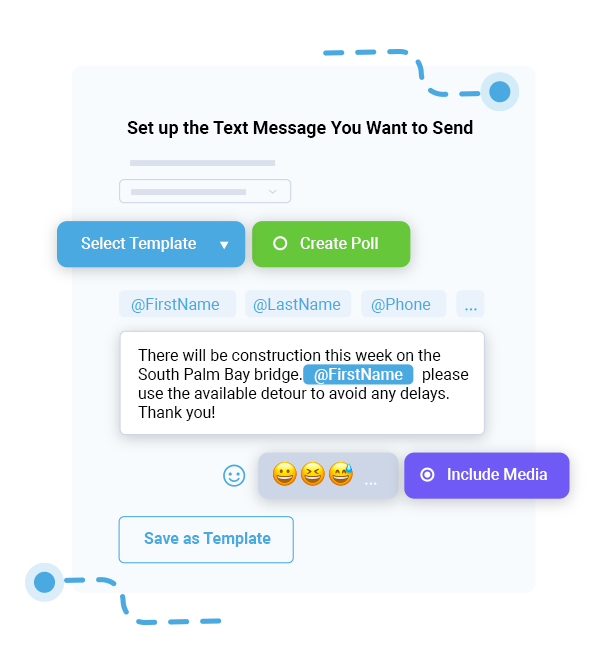
Reminder: Pine St. closed for construction Sept 3 to 7, 8 am to 5 pm. Use Elm Rd. detour.
Emergency Closure
Emergency: 5th Ave closed due to water main break. Avoid the area. Crews on site.
Detour Alert
Traffic Update: Use Oak St. detour during Main St. closure today until 6 pm.
Overnight Work
Notice: Overnight road work on Central Blvd from 10 pm to 5 am. Expect noise.
Project Extended
Update: Construction on River Rd extended to Fri. Thank you for your patience.
All Clear
Road Update: Main St. is now open. Construction completed.
Why Local Governments Choose DialMyCalls for Road & Construction Notifications
Precise Segmentation
DialMyCalls makes it simple to send messages to specific neighborhoods, zones, or routes without spamming unaffected residents.
Instantly Send to Thousands
Whether it’s a sudden emergency or scheduled maintenance, SMS messages reach thousands of recipients in seconds.
Multi-Channel Alerts (SMS + Voice + Email)
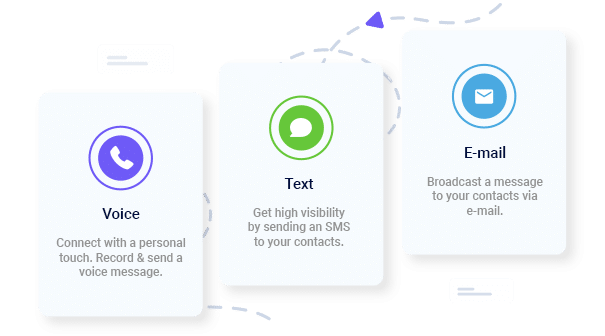
With DialMyCalls, you can combine text, voice, and email alerts for redundancy, so that residents never miss your updates.
Simple Interface for Public Works Staff
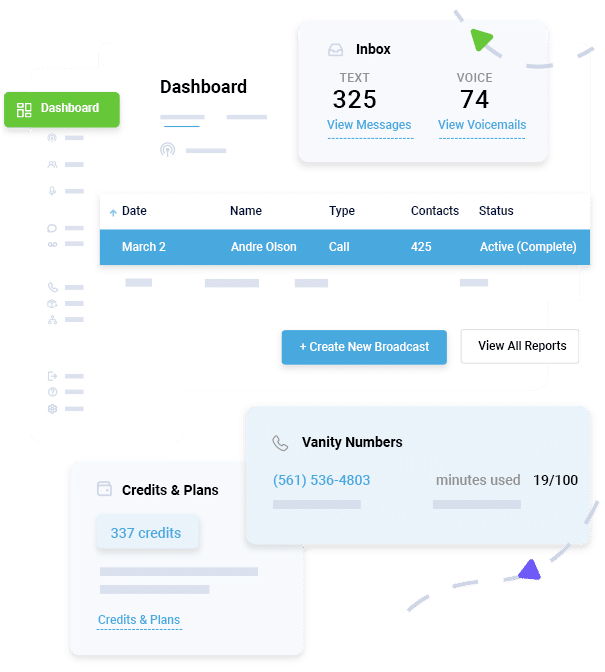
Easy-to-use dashboards allow city employees to send alerts quickly, without extensive training.
Reliable Delivery Reporting
Track delivery rates, open confirmations, and message history to ensure compliance and measure effectiveness.
DialMyCalls provides a comprehensive solution for local governments looking for ways to improve traffic management and resident communication. Learn more at DialMyCalls or learn more about how we support emergency notifications for communities, schools, and more.
Keep Your Residents in the Know
Text alerts help local governments alert residents to things like road closures, construction projects, and traffic disruptions. They provide real-time information, reduce congestion, improve compliance with detours, and cut down on resident complaints. By segmenting residents, using concise messaging, and sending updates promptly, municipalities can keep communities informed and moving smoothly.
Using a platform like DialMyCalls makes it easy to implement a reliable SMS alert system, complete with templates, segmentation, and delivery reporting.
Residents usually opt in by texting a keyword to a short code or subscribing through a city website. Here’s an example: “Text TRAFFIC to 80123.”
Can we send alerts only to impacted neighborhoods?
Yes, DialMyCalls supports zone-based segmentation so you can target messages precisely.
Should SMS alerts include detour maps?
Including short links to maps or detour routes is recommended, but it’s ultimately optional. If you choose to include them, use a URL shortener for easy mobile access.
How often should governments send construction updates?
That really depends on the project. Scheduled updates can be weekly or daily, while emergency closures should be sent immediately.
Can contractors use the system too?
Yes, role-based alerts let contractors and city staff receive targeted messages relevant to their work areas.
Ryan Betancur is an Emergency Management Planner at Hagerty Consulting and a proud US Army veteran. Drawing on years of experience, he specializes in healthcare and critical infrastructure emergency management, strategic planning, and business continuity. Ryan has been on the front lines managing COVID-19 responses in New Jersey and Illinois and supporting NYC's Migrant Crisis response. He holds a master's degree in Homeland Security and Emergency Management and multiple certifications in emergency preparedness.
“I am a youth minister and have spent hours in the past calling students individually to remind them of an upcoming event or to get out an urgent announcement. With DialMyCalls.com, I cut that time down to about 1 minute. I also love how I can see exactly who answered live and how long they listened so I know if they heard the whole message. DialMyCalls.com is the best website I have stumbled upon all year! Thanks!”
Real Results, Real ReviewsOver 40,000 customers trust our platform – and it shows.
4.3
502 Reviews
4.7
836 Reviews
Author
Ryan BetancurEmergency Management Planner
Ryan Betancur is an Emergency Management Planner at Hagerty Consulting and a proud US Army veteran. Drawing on years of experience, he specializes in healthcare and critical infrastructure emergency management, strategic planning, and business continuity. Ryan has been on the front lines managing COVID-19 responses in New Jersey and Illinois and supporting NYC's Migrant Crisis response. He holds a master's degree in Homeland Security and Emergency Management and multiple certifications in emergency preparedness.
“I am a youth minister and have spent hours in the past calling students individually to remind them of an upcoming event or to get out an urgent announcement. With DialMyCalls.com, I cut that time down to about 1 minute. I also love how I can see exactly who answered live and how long they listened so I know if they heard the whole message. DialMyCalls.com is the best website I have stumbled upon all year! Thanks!”
Fill out the form below to get a fast custom pricing quote specific for your
organization.Want to speak to our sales team now? Call us at
1-800-928-2086
Thank you!
A representative will be reaching out to you soon.
For immediate help you can call us on
800-928-2086.
Try Out DialMyCalls Now?
Enter a new password and click create account and you'll be able to send 25 test messages now.
Send A Sample Broadcast
We'll send a sample call or text to your phone right now. Remember when you use DialMyCalls you can record your message in your own voice. When the phone rings just pick up and say "Hello" to hear the message.