Reviewed by Saad Z. Asif
|
Updated on May 25, 2026
Summary
Managing school communication means coordinating messages for parents, students, teachers, and staff-each with different schedules and communication preferences. In reality, this flow of information isn’t easy, especially when people are spread across classrooms, offices, homes, and mobile devices.
Yet many schools still rely on traditional methods such as email, handwritten notes, and printed flyers. These methods often fall short when urgency matters. Emails can be ignored, paper notes can get lost in backpacks, and notices on school portals require recipients to log in before they can even see the message.
That’s why modern schools are turning to voice broadcasting systems that reach people instantly through multiple channels. It’s one of the most reliable tools available to ensure critical information is heard the moment it’s needed.
What Is Voice Broadcasting for Schools?
Voice broadcasting is an automated communication tool that enables your school to send messages to multiple recipients simultaneously – without manually dialing individual numbers. It works like a digital loudspeaker, but instead of broadcasting across the campus, it delivers messages directly to people’s phones, reducing the time spent making phone calls.
Here are the features that make voice broadcasting a valuable tool for schools:
Automated Delivery of Voice Messages
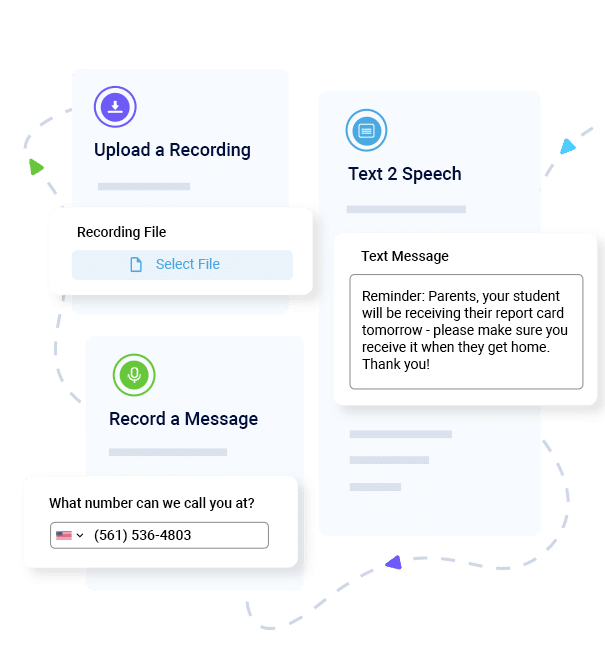
Record a message-such as a school closing alert or event update-and the system delivers it to every contact on your list.
Multi-channel Messaging
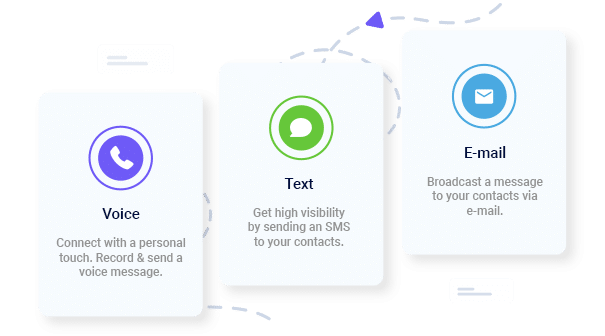
Choose to send messages via SMS, email, or phone call.
One-to-many Communication Model
Whether you need to reach hundreds or thousands of people, the system scales and delivers messages within seconds.
Useful for Emergencies and Daily Updates
Voice broadcasting supports urgent alerts and routine reminders to keep everyone informed and responsive.
When speed and reach are essential, voice broadcasting helps ensure maximum visibility – keeping everyone in the loop so critical alerts aren’t missed.
Keep Everyone Connected & Informed
Get the Word Out Quickly with Bulk Texting and Voice Calls
It might seem like every school already uses email, so why not rely on it as your primary communication channel? Email will always be a key part of your school’s communication toolkit. It’s useful for sharing detailed information, documents, and newsletters-but it falls short when you need to reach everyone quickly.
Here’s why:
Low Open Rates
Email open rates lag behind SMS and voice. Surveys show the average email open rate is around 15–25%, compared to 98% for SMS. That means even if your emails are delivered, many recipients won’t read them right away.
Delayed Responses
From newsletters to promotional emails, many messages go unread. This increases the chance that urgent alerts get buried or read days later. Busy parents and students may miss important updates due to crowded inboxes or inconsistent email-checking habits.
Students Often Ignore Email
For middle school, high school, and college students, email can feel like a background channel-present, but rarely checked. Some studies suggest students treat many official emails as low priority unless the message is pushed through faster channels like text or app notifications.
Parents May Miss Portal Updates
Many schools use portals to share updates, but most require parents to log in to view new notices. That extra step can cause hesitation, especially for busy families.
The bottom line: Email is essential, but it’s not reliable when timing matters. SMS and voice alerts are becoming foundational in school communication strategies because they provide immediacy and visibility-two things email often can’t guarantee.
Types of Schools That Use Voice Broadcasting
When people hear “voice broadcasting,” they often assume it’s only for large districts. In reality, it’s a flexible system that works across school types and environments. Whether you manage a small preschool or a large university, voice broadcasting can support your communication needs.
Here’s how different school communities use voice broadcasting to improve safety and engagement:
Preschools & Daycare Centers
Parents of young children often juggle family life with other responsibilities. They need quick, clear updates about weather closures, early dismissals, or last-minute schedule changes-often while rushing out the door.
For many early education centers, voice broadcasting delivers instant messages to parents, reducing stress, preventing missed pickups, and helping ensure children are safely cared for.
Elementary Schools
Communication between classroom teachers and parents becomes more complex as students move through grade levels. Instead of sending paper notices home in backpacks (where they may never be seen), elementary schools can use voice broadcasting to share event reminders, field trip details, and attendance alerts.
Middle and High Schools
Communication needs increase significantly in middle and high school. Parents want updates on academic performance, upcoming events, and schedule changes. At the same time, schools often need to reach specific groups-such as ninth-grade parents or football team members.
Voice broadcasting supports targeted messaging, allowing administrators to send alerts to the right group while reaching both parents and older students who may prefer mobile notifications.
Colleges and Universities
Large campuses may include thousands of students and staff across multiple facilities, making them similar to small cities. During emergencies, administrators must alert large groups immediately-something that manual systems can’t handle efficiently.
Colleges and universities are increasingly adopting multi-channel systems that include voice broadcasting because they improve reach and coordination across departments and audiences.
Voice broadcasting can help universities by:
Alerting students and staff about urgent campus safety issues
Notifying families about major schedule changes or emergencies
Sending reminders about events, enrollment deadlines, and campus resources
Common Use Cases for School Voice Broadcasting
Schools use voice broadcasting every day to communicate quickly and clearly with families and staff. Over time, many schools discover they need it for more than just emergencies-it’s also useful for daily operations that keep schools running smoothly.
Below are the most common and effective use cases:
Emergency Alerts and Lockdowns
Emergencies are unpredictable. While no school expects them, being prepared is essential. In these situations, time matters-and action must be immediate.
Voice broadcasting allows administrators to send alerts to parents, students, teachers, and staff simultaneously. Automated calls and SMS deliver instructions directly, without requiring anyone to check a portal or refresh an inbox.
Weather-related closures
Weather events like snowstorms, hurricanes, and flooding can force last-minute closures or delayed openings. Weather remains one of the most common reasons schools need to communicate urgently. According to FEMA, early communication is a key part of weather-related emergency preparedness for schools.
Voice broadcasting helps schools notify families before the school day begins. Parents receive a call and a follow-up text, reducing confusion and preventing unnecessary travel in unsafe conditions.
Attendance and Tardy Notifications
Attendance alerts are another high-impact use case. Automated voice or SMS notifications can inform parents when a student is absent or tardy. These messages improve attendance while eliminating the need for staff to make individual calls.
Event Reminders
School calendars are filled with field trips, parent-teacher conferences, and extracurricular activities-all of which benefit from reminders. Email-only reminders are easy to overlook, but a short message sent the day before an event can significantly improve attendance and preparedness without adding extra work for staff.
PTA and Meeting Announcements
PTA meetings, school board sessions, and community events often have low turnout due to missed communication. Voice and text reminders sent to targeted parent groups can increase awareness and participation.
Campus-wide Safety Alerts
Voice broadcasting plays a major role in campus safety. Alerts about security concerns, restricted areas, or emergency instructions can be delivered to the entire campus-or to specific groups-within seconds.
Instant Communication, Whenever You Need It
Send Real-Time SMS & Voice Call Alerts from Anywhere
While use cases vary, the benefits of voice broadcasting are consistent across school types. It improves reliability, strengthens response times, and reduces the workload on school staff.
Instant Reach
Voice broadcasting delivers messages in seconds. This eliminates the delays caused by manual calling or relying on recipients to check email. Since voice calls and texts arrive directly on mobile phones, recipients are far more likely to notice them immediately-especially during urgent situations.
Multi-channel Communication
No single channel is perfect. That’s why modern school notification systems use multiple channels-voice calls, SMS, and email-working together. If someone misses one channel, they can still receive the message through another. This redundancy increases the likelihood that critical information reaches the right people.
Organized Contact Management
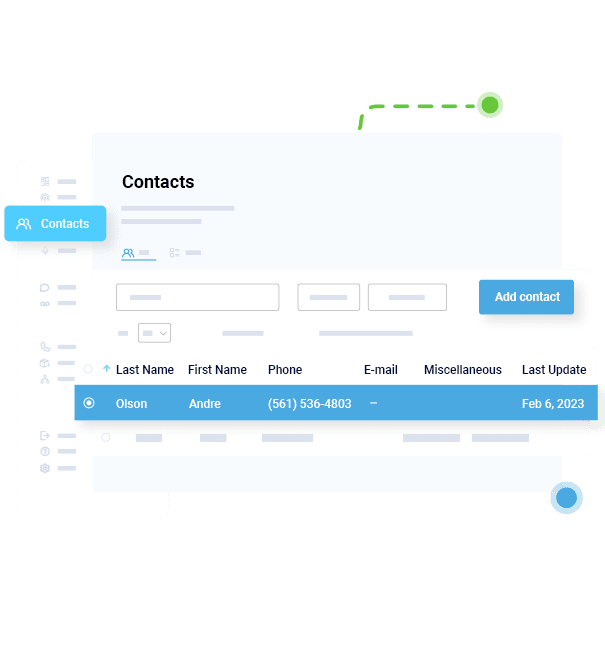
Schools manage complex contact lists: parents, teachers, staff, contractors, and administrators. These groups often require different information at different times. Voice broadcasting makes targeted messaging possible, ensuring the right message reaches the right audience without over-alerting others.
Reduced Administrative Workload
One of the biggest benefits schools notice is time saved. Before automated messaging, schools relied on phone trees, manual calls, and staff time to relay information-methods that were slow and prone to errors. With voice broadcasting, administrators can send one message and reach hundreds or thousands of recipients at once. What once took hours can now be done in minutes.
How DialMyCalls Supports School Voice Broadcasting
DialMyCalls provides schools with a reliable, easy-to-use communication system designed to support both daily messaging and emergencies. Key features include:
Automated Voice Calls
Schools can record or upload a message in advance (or on the spot) and send it to thousands of recipients without manual dialing.
SMS and Email Follow-ups
DialMyCalls reinforces communication with additional delivery channels, ensuring families receive information in the format they prefer.
Contact Grouping
Organize contacts into groups so you can target the right audience without confusion or unnecessary alerts.
Emergency-ready Infrastructure
The platform supports high-volume delivery and time-sensitive communication, helping schools stay prepared when it matters most.
Easy-to-use Dashboards
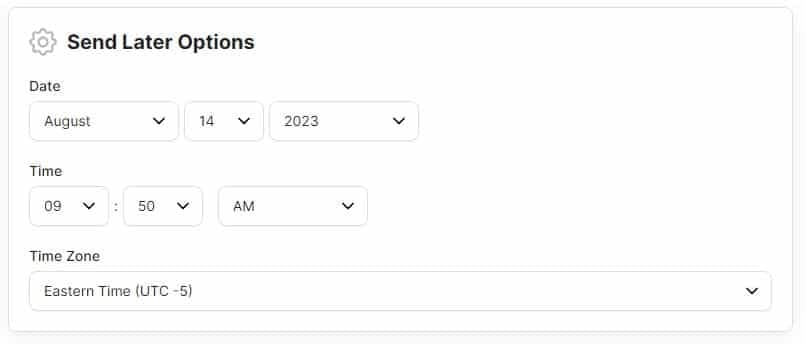
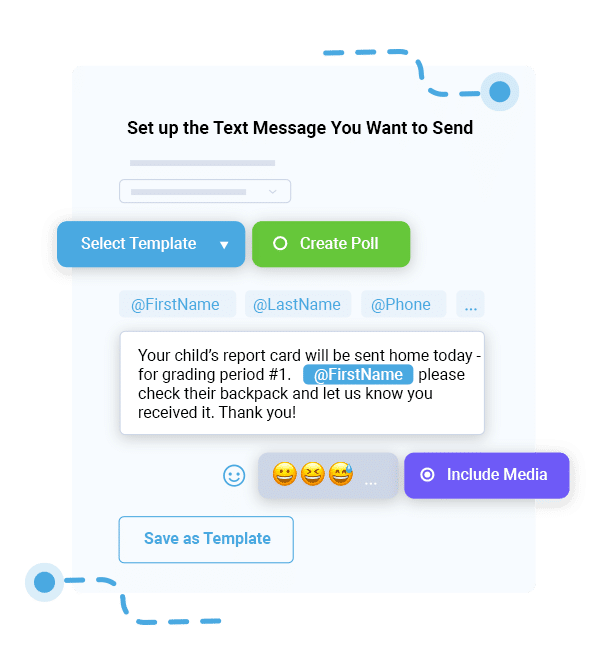
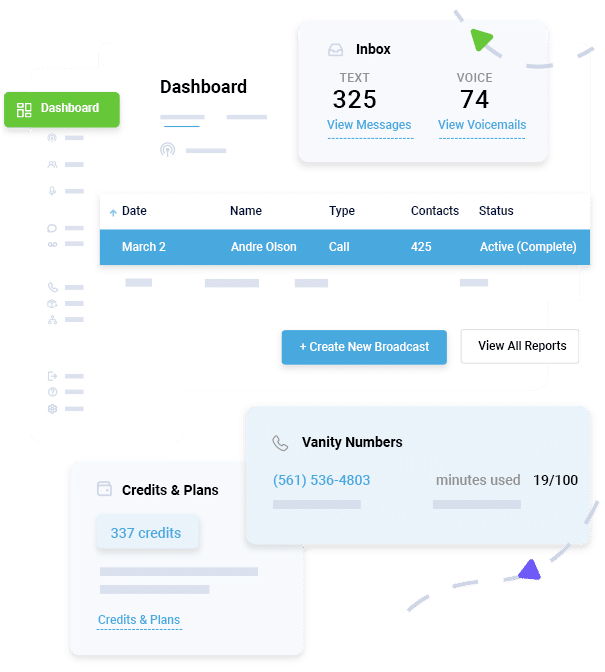
Administrators don’t need technical expertise. DialMyCalls provides clear tools for creating and scheduling messages, selecting groups, and monitoring delivery status.
Conclusion
Communication in schools has become a safety concern – not just a convenience. Schools must be able to reach the right people at the right time without delay. Voice broadcasting fills that gap by providing a modern notification system that supports both routine updates and urgent alerts, ensuring critical information is heard, understood, and acted on quickly.
A dependable notification system builds confidence. It reduces risk, improves coordination, and strengthens trust among parents, students, and staff. Most importantly, administrators know they have the tools to communicate clearly when it matters most.
School Voice Broadcasting FAQs
What is voice broadcasting in schools?
Voice broadcasting is an automated communication method that allows schools to send voice calls, text messages, and emails to large groups at once for emergencies and everyday updates.
Why do schools use voice broadcasting systems?
Schools use voice broadcasting to deliver urgent alerts and routine updates quickly and reliably, without relying on manual calls or email alone.
Is voice broadcasting used for emergencies?
Yes. Voice broadcasting is commonly used for emergencies such as lockdowns, weather closures, and campus safety alerts because it delivers messages instantly.
Can schools send both voice and text alerts?
Yes. Modern systems allow schools to send voice calls along with SMS and email alerts to improve delivery and response rates.
Who should have access to school broadcasting systems?
Schools can give access to administrators and designated staff members responsible for school communications.
Tim Smith is the Media Manager at DialMyCalls, where he has leveraged his expertise in telecommunications, SaaS, SEO optimization, technical writing, and mass communication systems since 2011. Tim is a seasoned professional with over 12 years at DialMyCalls and 15+ years of online writing experience.
“I am a youth minister and have spent hours in the past calling students individually to remind them of an upcoming event or to get out an urgent announcement. With DialMyCalls.com, I cut that time down to about 1 minute. I also love how I can see exactly who answered live and how long they listened so I know if they heard the whole message. DialMyCalls.com is the best website I have stumbled upon all year! Thanks!”
Real Results, Real ReviewsOver 40,000 customers trust our platform – and it shows.
4.3
502 Reviews
4.7
836 Reviews
Author
Tim SmithMedia Manager
Tim Smith is the Media Manager at DialMyCalls, where he has leveraged his expertise in telecommunications, SaaS, SEO optimization, technical writing, and mass communication systems since 2011. Tim is a seasoned professional with over 12 years at DialMyCalls and 15+ years of online writing experience.
“I am a youth minister and have spent hours in the past calling students individually to remind them of an upcoming event or to get out an urgent announcement. With DialMyCalls.com, I cut that time down to about 1 minute. I also love how I can see exactly who answered live and how long they listened so I know if they heard the whole message. DialMyCalls.com is the best website I have stumbled upon all year! Thanks!”
Fill out the form below to get a fast custom pricing quote specific for your
organization.Want to speak to our sales team now? Call us at
1-800-928-2086
Thank you!
A representative will be reaching out to you soon.
For immediate help you can call us on
800-928-2086.
Try Out DialMyCalls Now?
Enter a new password and click create account and you'll be able to send 25 test messages now.
Send A Sample Broadcast
We'll send a sample call or text to your phone right now. Remember when you use DialMyCalls you can record your message in your own voice. When the phone rings just pick up and say "Hello" to hear the message.