Emergency notifications support every phase of an earthquake. They help schools, organizations, and communities improve safety awareness, reduce panic, and help teams restore operations faster. This guide explains everything you need to know about emergency notifications, from their importance, best practices, and common mistakes to avoid.
Earthquakes strike without warning. They hit fast and leave no time for people to prepare. When the ground moves, the first few seconds often determine whether people find safety or end up getting caught up in the chaos.
Findings from the U.S. Geological Survey show that early-warning systems paired with fast communication channels can improve safety outcomes by giving people time to take immediate protective actions.
That’s why having a reliable emergency notifications system is necessary. It helps safety teams communicate quickly and relay essential updates throughout the event and into recovery.
The Importance of Rapid Communication During Earthquakes
Earthquakes begin abruptly. Researchers at the U.S. Geological Survey (USGS) note that earthquakes often occur with no visible precursors. This means that there is usually no buildup or visible signs. People, therefore, have no time to prepare once the ground begins to shake.
Immediate communication within those first moments, ideally before strong ground movement reaches your facility, can help mitigate risk and ensure protective actions.
For organizations that rely on rapid communication, they give out reliable instructions when it matters and see stronger outcomes. Here are some of the reasons why communication is important during earthquakes:
It delivers early warnings, particularly when integrated with systems such as ShakeAlert.
It sends prompt, immediate protective actions, such as “Drop, Cover, and Hold On.”
It coordinates evacuations or shelter-in-place procedures.
Teams are able to share real-time updates after the initial tremor.
It guides recovery efforts, including safety checks and infrastructure assessments.
Without communication, people may misjudge the severity of the situation, which often results in delayed protective action.
How Emergency Notifications Strengthen Earthquake Safety Plans
Notification systems are now a core part of earthquake preparedness strategies. They support each stage of the seismic response and help organizations coordinate their teams quickly and ensure people receive the information they need at the right time. These are some of the ways emergency notifications are crucial:
Early Warning and Real-Time Alerts
Earthquake early-warning systems only work when alerts reach people fast. To ensure this, we advise that organizations integrate their existing internal alerts with regional detection services such as ShakeAlert.
In a performance review between 2019 and 2023, it was discovered that ShakeAlert successfully issued alerts for 41 out of 53 earthquakes of magnitude 4.5 or greater within its coverage zone. This proves that early warnings work in real events. With this system in place, establishments like schools, hospitals, industrial facilities, and government buildings can enable:
Triggering of internal safety protocols (e.g., halting elevators or machinery
Communication During Event
During earthquakes, regular communication channels can fail. Cell networks can get congested, Wi-Fi connections may drop, and internal phone systems may become unreliable. With dependable emergency alert systems, notifications can reach people through SMS, voice calls, emails, push notifications, and PA systems.
Redundancy matters during critical events, so if one channel fails to deliver the message, teams should have alternatives. These notifications are vital because they help to pass information that directs evacuations, coordinates building checks, activates safety teams, and communicates with staff and leadership on the intensity of the shaking.
Post-Event Coordination
Once the shaking stops, the work begins. Teams need fast updates to help people regroup safely and carry out response plans. Emergency notifications allow leaders to:
Send status checks, such as “Reply SAFE if you are unharmed.”
Mobilize maintenance crews. For example, “Maintenance team, report to Zone 3.”
Announce temporary closures: “Building A closed pending inspection.”
Benefits of Using Emergency Notifications in Earthquake Planning
Aside from delivering alerts, emergency notifications can help organizations manage earthquakes and recover quickly. The benefits below outline why mass notifications are now considered essential for earthquake preparedness.
Faster Response Times
Speed is the defining advantage of modern notification systems. When an earthquake is detected, early-warning systems can provide automated alerts within seconds to give people the time they need to act before the shaking intensifies. That window of time can allow people to:
Brace in a safe position
Move away from falling hazards
Avoid elevators or stairwells
Shut down equipment in high-risk environments.
Improved Safety Awareness
People make better decisions when they understand what is happening and what they should do next. Clear emergency notifications help to improve safety awareness by giving people simple instructions when they need them. For example, research shows that injury during earthquakes is most often caused by falling or flying objects, not structural collapse.
What it means is that when people receive direct instructions like “Drop, Cover, and Hold On,” they’re more likely to take the safest immediate action, reducing the risk of debris-related injuries. Also, alerts can include specific actions such as safe evacuation routes, aftershock warnings, or building-specific hazards, all of which enable recipients to act instead of guessing what to do.
Reduced Panic and Confusion
Emergencies create fear in the minds of people. This is often caused by uncertainty and lack of information rather than the shaking itself. And when people do not understand what is happening or receive guidance, they are more likely to make unsafe decisions.
On the other hand, timely alerts prevent chaos and reduce anxiety by:
Confirming that an earthquake is occurring
Providing a simple protective action
Stating when it is safe to evacuate
Clarifying post-event procedures
Studies on opt-in mobile earthquake-alert apps found that alerts can arrive fast enough for many recipients to brace and take protective action before they feel the shaking.
Data-Driven Accountability
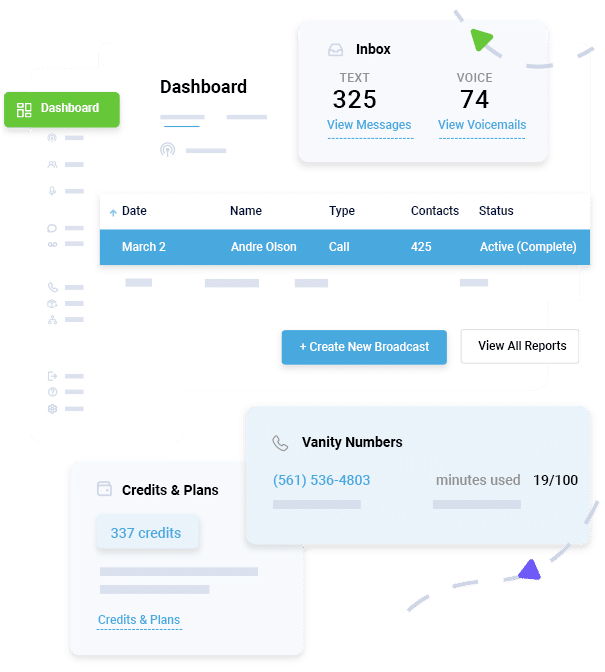
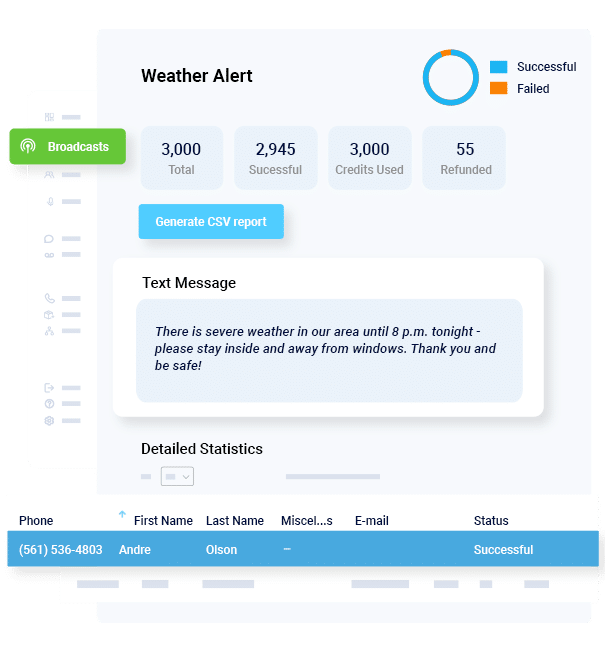
Information moves fast during emergencies, and it can be difficult to manually get insight into every alert sent. With emergency notification systems, organizations can easily track delivery, receipt, and acknowledgment of every alert.
This level of accountability guarantees that each alert sent not only gets to the right channels but also creates a string of communication between help and the recipient. Emergency notification systems provide real-time reporting that shows:
Who received the alert
Whether the delivery succeeded
Who acknowledged the message
Which team members may need follow-up
This helps facility managers, school administrators, and emergency teams quickly identify gaps, check on vulnerable individuals, and prioritize support.
Continuity of Operations
After major earthquakes, aftershocks remain a risk for hours or days. They disrupt services, staffing, communication, and daily operations. Organizations need ongoing communication about hazards and safe zones during these periods to gradually transition into normal operations.
So even after the earthquake has ended, emergency notifications continue to support teams to recover. This can be by:
Best Practices for Earthquake Emergency Notifications
Effective mass notification planning requires clear procedures, well-defined messages, and proper system configuration. Here are ways you can ensure that:
Integrate With Seismic Data Systems
For organizations in earthquake-prone regions, integrating with systems like ShakeAlert and other early-warning technologies can facilitate fast actions. Automated alerts can help activate alarms and notify teams before the shaking turns fatal.
Create Pre-Written Templates
Preparing emergency messages ahead of time guarantees an effective and panic-free communication pipeline. Instead of creating alert messages when disaster strikes, a pre-written template saves time and ensures clarity during high-pressure moments.
Examples of pre-written templates include:
Earthquake Emergency Text Message Template #1
Earthquake detected nearby. Drop, Cover, and Hold On until shaking stops.
Earthquake Emergency Text Message Template #2
Strong shaking reported. Evacuate to designated areas once movement stops.
Earthquake Emergency Text Message Template #3
Aftershock warning. Stay clear of windows and unstable structures.
Earthquake Emergency Text Message Template #4
Structural inspections underway. Await further instructions.
Use Multi-Channel Messaging
Multi-channel communication is the backbone of rapid communication during disasters, and relying on one communication pathway can be risky. An effective system uses:
If your organization operates across cities, campuses, or multiple buildings, then you should consider segmenting your contacts by location. Geo-targeting ensures alerts reach only the affected zones and prevents raising unnecessary alerts, and reduces the risk of message fatigue in your entire network.
Run Regular Drills
Regular drills improve instinctive response. People who practice Drop–Cover–Hold On are far more likely to use it instinctively during an earthquake, which lowers injury risk.
Provide Follow-up Updates
Aftershocks can be dangerous. Regularly update your team on structural inspection, emergency service availability, and building access to help them reintegrate.
How DialMyCalls Supports Earthquake Safety
DialMyCalls provides a dependable communication channel that helps organizations take the right action during seismic events.
Instant Multi-Channel Emergency Alerts
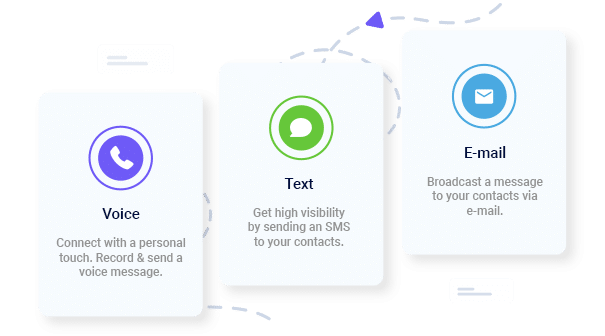
With DialMyCalls, your organization can send real-time messages through multiple channels, like SMS, voice calls, and emails, which ensures that the alert reaches everyone quickly, even when cellular networks are strained.
Geo-Targeted Notifications
Organizations can notify only the individuals or facilities within the impacted area, reducing confusion and preventing unnecessary alerts.
Two-Way Communication
Teams, staff, and community members can respond with simple updates,
“SAFE”
“NEED ASSISTANCE”
“AT EVAC LOCATION”
This helps leaders confirm safety status and direct resources where they’re needed most.
Cloud-Based Resilience
DialMyCalls remains accessible even if local infrastructure is damaged. Because it operates in the cloud, your alerts continue sending from any device.
Delivery Reporting
You also get access to real-time reporting, which shows who received, opened, or acknowledged the alerts. This helps to improve accountability and ensure compliance with safety standards.
Common Mistakes in Earthquake Communication
Even strong safety plans can fall short if communication is not handled properly. These are the common pitfalls organizations should avoid:
Sending Alerts Too Late
Timing is one of the biggest challenges in earthquake communication, and even a few seconds can influence safety outcomes. Late communications can lead to delayed evacuations, slower coordination, and confusion. This is why organizations must remove manual steps wherever possible and opt for automated workflows.
Overloading Users With Non-Critical Updates
When people receive too many alerts, it can cause unnecessary alarms and bury vital information under noise. It can also create alert fatigue, where recipients become desensitized to messages and ignore future messages. This usually happens when messages are not segmented.
To fix this, use location-based segmentation to notify only affected areas. Messages should also focus on only what people need to stay safe and informed.
Failing to Train Staff on Response Protocols
Having notifications is not enough if people don’t know how to respond to them. Without training, responses can become unsafe, such as attempting to run during shaking or congregating in affected hallways or near windows.
To stay ahead, run regular drills and integrate alerts into training scenarios. Teams should know what a notification looks like, what it means, and what steps to take when one comes. Earthquake readiness improves dramatically when the response is practiced rather than improvised.
Ignoring Language Accessibility (Multi-Language Messaging)
Earthquake communication must reach everyone, including those who do not speak the primary language used at a facility. Since millions of U.S. residents speak a language other than English at home, and many communities include multilingual or limited-English-proficiency populations, instructions must be clear or translated. If not, recipients may misinterpret critical safety information or miss it completely.
At a minimum, provide earthquake messaging in the primary languages spoken across your organization. Better yet, use alert tools that allow you to store multiple translated versions of the same template and deliver them automatically to the correct audience segment.
Conclusion
While earthquakes may be unpredictable, effective communication shouldn’t be. By having a strong emergency notification system, organizations can guide protective actions, coordinate teams, and support faster recovery.
DialMyCalls ensures teams are well prepared during emergencies, particularly when every second matters. It equips teams with multi-channel alerts, location targeting, automated workflows, and reliable cloud delivery. Get started with DialMyCalls today and keep your people informed through every phase of an earthquake.
Earthquake Emergency Notification FAQs
How do emergency alerts work during earthquakes?
They can be triggered automatically through early-warning systems or manually by emergency teams. Alerts deliver protective instructions across SMS, voice, and email.
Can alerts be sent automatically based on seismic data?
Yes. Tools like ShakeAlert can activate automated notifications before strong shaking arrives.
What’s the difference between an alert and a warning?
Alerts direct immediate protective actions; warnings communicate expected risk or aftershocks.
How can organizations integrate with ShakeAlert?
Through compatible mass-notification systems or APIs that connect to seismic event data.
How does DialMyCalls ensure reliability during disasters?
The cloud-based system, multi-channel delivery, and real-time reporting keep communication steady even when the infrastructure is compromised.
Ryan Betancur is an Emergency Management Planner at Hagerty Consulting and a proud US Army veteran. Drawing on years of experience, he specializes in healthcare and critical infrastructure emergency management, strategic planning, and business continuity. Ryan has been on the front lines managing COVID-19 responses in New Jersey and Illinois and supporting NYC's Migrant Crisis response. He holds a master's degree in Homeland Security and Emergency Management and multiple certifications in emergency preparedness.
“I am a youth minister and have spent hours in the past calling students individually to remind them of an upcoming event or to get out an urgent announcement. With DialMyCalls.com, I cut that time down to about 1 minute. I also love how I can see exactly who answered live and how long they listened so I know if they heard the whole message. DialMyCalls.com is the best website I have stumbled upon all year! Thanks!”
Real Results, Real ReviewsOver 40,000 customers trust our platform – and it shows.
4.3
502 Reviews
4.7
836 Reviews
Author
Ryan BetancurEmergency Management Planner
Ryan Betancur is an Emergency Management Planner at Hagerty Consulting and a proud US Army veteran. Drawing on years of experience, he specializes in healthcare and critical infrastructure emergency management, strategic planning, and business continuity. Ryan has been on the front lines managing COVID-19 responses in New Jersey and Illinois and supporting NYC's Migrant Crisis response. He holds a master's degree in Homeland Security and Emergency Management and multiple certifications in emergency preparedness.
“I am a youth minister and have spent hours in the past calling students individually to remind them of an upcoming event or to get out an urgent announcement. With DialMyCalls.com, I cut that time down to about 1 minute. I also love how I can see exactly who answered live and how long they listened so I know if they heard the whole message. DialMyCalls.com is the best website I have stumbled upon all year! Thanks!”
Fill out the form below to get a fast custom pricing quote specific for your
organization.Want to speak to our sales team now? Call us at
1-800-928-2086
Thank you!
A representative will be reaching out to you soon.
For immediate help you can call us on
800-928-2086.
Try Out DialMyCalls Now?
Enter a new password and click create account and you'll be able to send 25 test messages now.
Send A Sample Broadcast
We'll send a sample call or text to your phone right now. Remember when you use DialMyCalls you can record your message in your own voice. When the phone rings just pick up and say "Hello" to hear the message.