When an emergency unfolds, the first report determines how quickly teams can act. If that information is incomplete or unclear, response slows. Decisions stall. In high-risk situations, those lost minutes matter.
Situational awareness means having an accurate understanding of what is happening, where it is happening, how serious it is, and who is affected. Emergency managers rely on that clarity to make fast, confident decisions.
Traditional reporting depends on verbal descriptions. Under stress, details are missed, severity is misjudged, and locations are unclear. Responders must pause to clarify before taking action.
Modern emergency reporting tools eliminate that delay. Video provides visual confirmation. Audio preserves context. Structured digital forms require essential details every time. Instead of interpreting fragmented information, teams receive verified, standardized input from the start.
Modern emergency reporting tools play a critical role in improving emergency response time across schools, municipalities, healthcare facilities, and workplaces.
This article explains how modern emergency reporting tools strengthen situational awareness and how they integrate with emergency notification systems for faster, more coordinated response.
How Reporting Quality Directly Impacts Emergency Response Time
Emergency response speed is not determined only by how fast responders move. It is determined by how quickly they can make a decision.
The U.S. Department of Homeland Security and CISA consistently emphasize that the best emergency response systems depend on clear, reliable information flows before, during, and after incidents. In practice, that flow begins with the initial report.
When reporting is vague or incomplete, responders cannot act immediately. They must confirm the location. Clarify severity. Validate whether the situation is escalating. That validation step adds friction.
Response time is directly shaped by four reporting-related factors:
Reporting speed: How quickly leadership becomes aware of the incident.
Information completeness: Whether essential details such as location, severity, and hazards are included.
Verifiability: Whether information can be confirmed without additional clarification.
Routing efficiency: Whether the report reaches the correct decision-makers immediately.
Each of these factors ties directly back to reporting quality. For organizations that rely on mass communication tools such as DialMyCalls’ community notification system, reporting accuracy directly affects how quickly alerts can be launched.
Improve reporting at the source, and overall emergency response time improves.
Instant Communication, Whenever You Need It
Send Real-Time SMS & Voice Call Alerts from Anywhere
The Problem With Traditional Emergency Reporting Methods
Traditional emergency reporting methods rely heavily on phone calls and verbal relay. While familiar, these methods introduce avoidable friction during fast-moving incidents.
Phone Calls Without Visual Context
Phone calls provide information, but they do not provide confirmation. Emergency managers must rely entirely on how clearly someone can describe what they see. Without visual context, it is difficult to assess:
The scale of the incident
Whether conditions are worsening
How close hazards are to people or infrastructure
Whether immediate escalation is necessary
That uncertainty slows decision-making and impacts response speed.
Incomplete or Inconsistent Information
Under stress, details are often missed. Exact locations may be unclear. Severity may be underestimated or overstated. Key facts may be forgotten. Because verbal reports are unstructured, two people describing the same incident may provide very different levels of detail. This directly affects information completeness.
Delays Caused by Back-and-Forth Clarification
When critical details are missing, emergency managers must follow up. They confirm location. Verify individuals involved. Clarify risk levels. Each clarification adds delay at the earliest stage of response.
Increased Stress and Misinterpretation
Stress affects communication. Tone can distort urgency. Details can be misheard. Background noise interferes. When communication depends on interpretation instead of verified input, situational awareness weakens.
Traditional reporting introduces uncertainty. And uncertainty slows response.
What Are Modern Emergency Reporting Tools and How Do They Work?
Modern emergency reporting tools improve how incidents are documented at the moment they occur. Instead of relying only on verbal descriptions, they allow people to submit clearer, more verifiable information in three primary ways:
Video Reporting
Short video clips visually document conditions in real time. This gives decision-makers immediate confirmation of severity, scale, and visible hazards.
Audio Reporting
Voice notes allow individuals to quickly describe what is happening when typing or filming is impractical. Audio preserves urgency and environmental context.
Structured Digital Incident Report Forms
Digital forms require essential information such as exact location, incident type, and risk level. Required fields reduce missing details and eliminate ambiguity.
All three tools are designed to work from mobile devices, so incidents can be submitted instantly from wherever they are discovered. Together, these reporting methods replace fragmented verbal descriptions with clear, standardized, and actionable input that can feed directly into systems like an emergency texting system for rapid SMS alerts.
How Video Reporting for Emergency Management Improves Response Time
Understanding how video reporting improves emergency response time begins with visual verification.
Immediate Visual Confirmation
Video reduces interpretation gaps and supports faster decision-making. Video reporting provides real-time visual evidence of:
Fire and smoke conditions
Flood levels during severe weather
Structural damage
Crowd density
Equipment failure
NOAA and the National Weather Service frequently emphasize the importance of visual confirmation during weather-related events, where conditions can evolve rapidly. Weather alert systems allow organizations to notify stakeholders quickly during severe weather events.
Faster Severity Assessment
Video reduces interpretation gaps and accelerates response. When decision-makers can see conditions directly:
Triage improves
Resource allocation is faster
Escalation decisions happen sooner
Protective actions can be issued more confidently
The Role of Audio Reporting in High-Stress Emergency Situations
Audio reporting provides flexibility when video or typing is impractical.
Faster Reporting Under Stress
In high-pressure environments, typing slows communication. Voice recordings allow individuals to describe escalating conditions immediately without navigating forms or camera positioning. This reduces friction at the reporting stage and speeds initial awareness.
Preserves Environmental Context
Background sounds such as alarms, crowd noise, weather conditions, or machinery provide additional situational cues. Tone and urgency also help decision-makers assess how serious or fast-moving a situation may be. Audio captures more than words. It captures atmosphere.
Useful When Video Is Not Possible
There are situations where video is unsafe, inappropriate, or restricted. In healthcare facilities, privacy regulations may limit visual recording. In schools using platforms such as DialMyCalls’ school notification system, protecting student privacy is critical. In confined or dangerous environments, holding up a camera may not be safe. Audio reporting provides a practical alternative while maintaining speed and clarity.
How Structured Digital Incident Report Forms Improve Emergency Response
Structured digital reporting reduces ambiguity. The benefits of digital incident report forms for emergency management include accuracy, completeness, and automation.
Standardized Data Fields
Standardization reduces misinterpretation. Digital forms can require:
Exact location
Incident category
Time of occurrence
Individuals involved
Immediate risk indicators
Reduced Clarification Loops
Required fields prevent incomplete submissions. This reduces the need for follow-up calls and eliminates unnecessary delays.
Automated Routing
Reports can automatically notify appropriate stakeholders based on location, severity, or incident type. This improves routing efficiency and reduces escalation delays.
Keep Everyone Connected & Informed
Get the Word Out Quickly with Bulk Texting and Voice Calls
How Integrating Video, Audio, and Digital Forms Improves Situational Awareness
While video, audio, and digital forms are powerful individually, their true value lies in their integration. Relying on a single reporting method often leaves “information gaps” that emergency managers must fill through manual follow-ups. Integrating these tools eliminates those gaps by creating a comprehensive, multimodal data set.
Cross-Verification in Real Time: A digital form provides the structured data (who, what, where), while an attached video or audio clip provides the context (severity, atmosphere). This allows dispatchers to verify the “facts” of a form against the “reality” of the footage without sending a secondary inquiry.
Eliminating Clarification Loops: When managers receive a structured report accompanied by visual evidence, the need for back-and-forth questioning disappears. Decisions to escalate or deploy resources move from “informed guesses” to “data-backed actions.”
A Universal Operating Picture: By combining these inputs into a single notification, every stakeholder—from the first receiver to the field responder—sees the same level of detail simultaneously. This synchronized awareness ensures that by the time help arrives, they are already briefed on the exact nature of the scene.
Modern emergency reporting isn’t just about documenting an event; it’s about response acceleration. When these tools work in harmony, they turn raw data into actionable intelligence in seconds, not minutes.
Best Practices for Implementing Modern Emergency Reporting
Technology alone does not improve response time. Implementation matters.
Keep Tools Simple
If reporting is complicated, users default to phone calls. Simplicity increases compliance.
Train Before Incidents Occur
Include reporting tools in drills so users know how and when to submit video, audio, or structured reports.
Integrate Reporting With Notification Systems
Once an incident is verified, teams must quickly notify stakeholders. Reporting and notification should operate as a unified workflow inside platforms like DialMyCalls’ main platform.
Review and Refine
After drills or incidents, evaluate whether reports were complete, clear, and routed correctly. Continuous improvement strengthens response performance.
How DialMyCalls Fits Into Modern Emergency Communication
Modern emergency reporting tools improve how incidents are captured. Emergency notification systems determine how quickly that information is shared.
Once an incident has been documented through video, audio, or structured digital forms, organizations must quickly inform the right people. That may include administrators, first responders, staff, residents, parents, or community members. The faster that communication happens, the faster coordinated action can begin.
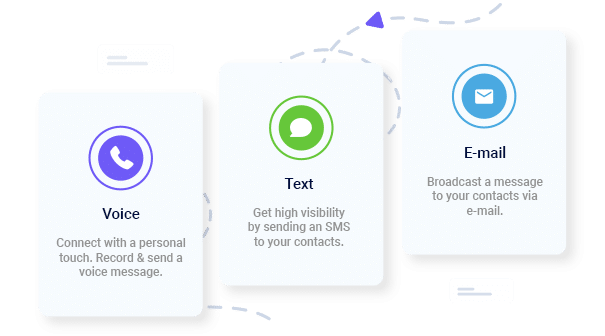
DialMyCalls supports this next step in the workflow. Through its Emergency Notification System, organizations can send mass alerts via SMS, voice broadcasts,and email within seconds of confirming an incident. Messages can be targeted to specific groups, buildings, departments, or communities, reducing confusion and limiting unnecessary disruption.
For schools, the School Notification System allows administrators to quickly notify parents, faculty, and staff during safety events. Municipalities and property managers can use the Community Notification System to alert residents during infrastructure failures, severe weather, or public safety incidents.
In time-sensitive situations, tools like the Emergency Texting platform and Weather Alerts system help ensure stakeholders receive information quickly, even during fast-moving or weather-driven events.
The key advantage is integration. When modern emergency reporting tools are paired with a reliable emergency notification platform, organizations eliminate the gap between awareness and communication. Reports can trigger alerts. Verified information can be distributed immediately. Follow-up updates can be issued as conditions evolve.
By pairing structured incident reporting with multi-channel alert infrastructure, organizations reduce lag between awareness and action. That coordination strengthens situational awareness, improves emergency response time, and supports more effective crisis management across schools, municipalities, healthcare facilities, and workplaces.
Conclusion
Emergency response begins with information. When reporting is unclear, response slows. When reporting is structured, verifiable, and immediate, decisions accelerate.
Modern emergency reporting tools reduce uncertainty at the earliest stage of an incident. When integrated with reliable emergency notification systems, organizations can move from awareness to action within seconds.
Modern emergency preparedness depends on modern reporting.
Modern Emergency Reporting Tools Frequently Asked Questions
What are modern emergency reporting tools?
Modern emergency reporting tools are digital systems that allow users to report incidents using video, audio recordings, and structured digital forms in real time. They improve situational awareness by capturing standardized, verifiable information at the moment an incident occurs, reducing delays caused by incomplete verbal reports.
How do modern emergency reporting tools improve emergency response time?
Modern emergency reporting tools improve emergency response time by reducing clarification delays and capturing essential information upfront. By requiring location, severity, and risk details and providing visual or audio confirmation, they allow emergency managers to make faster escalation decisions.
How does video reporting improve emergency response time?
Video reporting for emergency management provides real-time visual confirmation of conditions. Seeing fire, flood levels, structural damage, or crowd density allows decision-makers to assess severity quickly and allocate resources more accurately without relying solely on verbal descriptions.
Why is situational awareness important during emergencies?
Situational awareness is critical during emergencies because it enables leaders to understand what is happening, where it is happening, and how serious it is. Without accurate situational awareness, responders must pause to verify information, which delays protective action.
Do digital reporting tools reduce response time?
Yes. Digital reporting tools reduce response time by requiring complete, standardized information at the moment an incident is reported. Structured forms eliminate missing details, reduce back-and-forth clarification, and support automated routing to the correct decision-makers, allowing faster escalation and notification.
How do reporting tools integrate with emergency alerts?
Reporting tools integrate with emergency notification systems by feeding verified incident data directly into alert workflows. Once confirmed, organizations can immediately send SMS, voice, or email alerts to affected groups, reducing the time between awareness and communication.
Ryan Betancur is an Emergency Management Planner at Hagerty Consulting and a proud US Army veteran. Drawing on years of experience, he specializes in healthcare and critical infrastructure emergency management, strategic planning, and business continuity. Ryan has been on the front lines managing COVID-19 responses in New Jersey and Illinois and supporting NYC's Migrant Crisis response. He holds a master's degree in Homeland Security and Emergency Management and multiple certifications in emergency preparedness.
“I am a youth minister and have spent hours in the past calling students individually to remind them of an upcoming event or to get out an urgent announcement. With DialMyCalls.com, I cut that time down to about 1 minute. I also love how I can see exactly who answered live and how long they listened so I know if they heard the whole message. DialMyCalls.com is the best website I have stumbled upon all year! Thanks!”
Real Results, Real ReviewsOver 40,000 customers trust our platform – and it shows.
4.3
502 Reviews
4.7
836 Reviews
Author
Ryan BetancurEmergency Management Planner
Ryan Betancur is an Emergency Management Planner at Hagerty Consulting and a proud US Army veteran. Drawing on years of experience, he specializes in healthcare and critical infrastructure emergency management, strategic planning, and business continuity. Ryan has been on the front lines managing COVID-19 responses in New Jersey and Illinois and supporting NYC's Migrant Crisis response. He holds a master's degree in Homeland Security and Emergency Management and multiple certifications in emergency preparedness.
“I am a youth minister and have spent hours in the past calling students individually to remind them of an upcoming event or to get out an urgent announcement. With DialMyCalls.com, I cut that time down to about 1 minute. I also love how I can see exactly who answered live and how long they listened so I know if they heard the whole message. DialMyCalls.com is the best website I have stumbled upon all year! Thanks!”
Fill out the form below to get a fast custom pricing quote specific for your
organization.Want to speak to our sales team now? Call us at
1-800-928-2086
Thank you!
A representative will be reaching out to you soon.
For immediate help you can call us on
800-928-2086.
Try Out DialMyCalls Now?
Enter a new password and click create account and you'll be able to send 25 test messages now.
Send A Sample Broadcast
We'll send a sample call or text to your phone right now. Remember when you use DialMyCalls you can record your message in your own voice. When the phone rings just pick up and say "Hello" to hear the message.