Schools depend on fast, reliable communication to keep students, staff, and parents safe during emergencies. This article highlights the top challenges schools face with emergency notifications – from delayed alerts and unclear messages to compliance gaps and alert fatigue. It explains how issues like outdated contact lists, manual systems, and one-way communication can create confusion when speed matters most. You’ll also learn practical, proven solutions: automated multi-channel alerts, cloud reliability, role-based contact groups, and two-way feedback. Finally, it shows how DialMyCalls helps schools overcome these challenges with instant SMS, voice, and email alerts – ensuring every message reaches the right person, every time.
Challenge #1 – Delayed or Inconsistent Communication
The Problem
A delay of only a few minutes can make a big difference when an emergency situation arises. A lot of schools are still using old-fashioned ways, such as manual phone trees, mass emails, or messaging apps that require users to log in individually. It usually takes a long time for these systems to reach everyone, and sometimes they only reach some groups while others are left without help. The outcome is that staff, students, and parents become confused, miss instructions, and panic unnecessarily.
Delays are most of the time the result of inefficiency and fragmentation. In a manual process, a staff member has to call people one by one, whereas some software solutions cannot handle thousands of alerts at the same time. Schools using only one mode of communication, for example, email, are at risk of slow delivery if servers are overloaded or there is a power outage.
The Solution
The quickest and most dependable way to fix the situation is to automate emergency notifications to be sent through many channels. Present-day communication faculties make it possible for schools to dispatch an alert in no time through SMS, the most popular way to communicate via mobile devices according to Statista, alongside voice calls, and email – all three simultaneously. This multi-channel approach guarantees that whoever someone is, or whatever device they have, they get the same message at the very same time.
It is also very good to be testing frequently. Doing quarterly drills or mock alerts is a way to confirm that the system is functioning under pressure, the contact lists are updated, and the delivery speeds are as expected.
DialMyCalls Insight
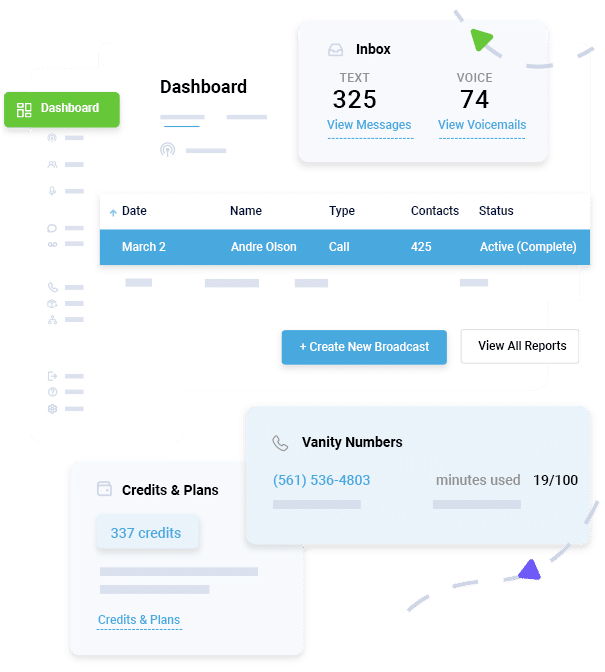
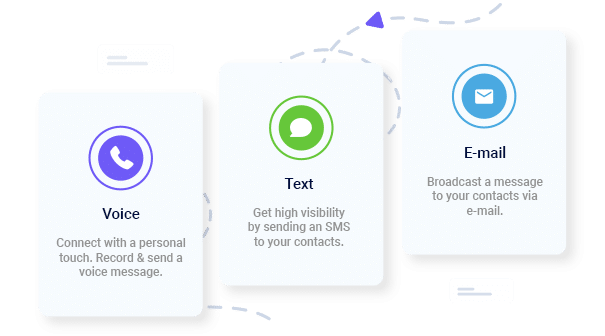
With DialMyCalls, schools can send thousands of alerts in seconds from a single dashboard. Messages go out via text, voice, or email simultaneously, ensuring everyone – from parents to bus drivers – receives critical updates without delay.
Challenge #2 – Reaching the Right People at the Right Time
The Problem
In an emergency, sending the wrong message to the wrong group can create more confusion than calm. Some schools accidentally notify every contact in their system about a minor event, while others fail to reach critical groups – like security staff or bus drivers – until it’s too late. When alerts aren’t properly targeted, communication loses both speed and clarity.
The Causes
Many of these problems result from outdated contact lists and a lack of message segmentation. It is still common in many schools to maintain contacts manually in spreadsheets, and some systems do not automatically sync with student information databases. Without well-organized contact groups, employees waste time sorting recipients for specific messages, especially in emergencies.
The Solution
The key is to maintain active contact databases that update automatically whenever new students enroll, new staff are added, or contact information changes. Schools should also establish role-based groups – such as teachers, parents, maintenance teams, and administrators – so messages can be sent to the correct recipients in seconds.
For time-sensitive events, using priority alert tiers is effective for contacting the most important people first. For example, news about a lockdown could be sent immediately to administrators and law enforcement, while parents could be informed once it’s best for them.
DialMyCalls Insight
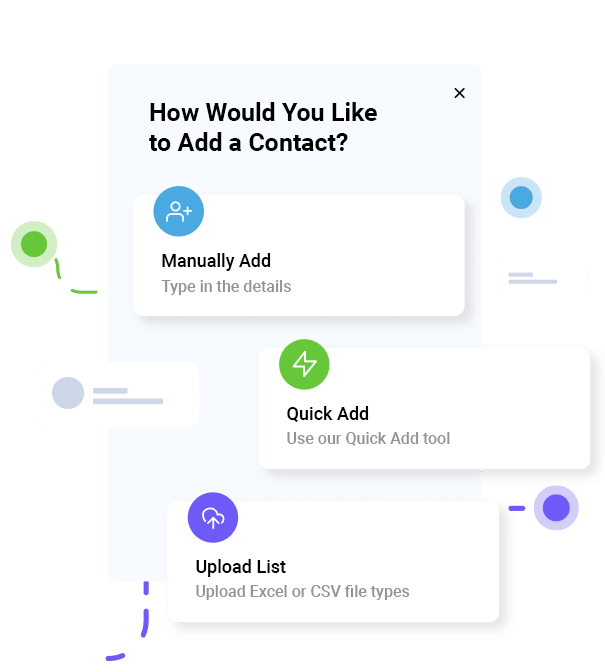
With DialMyCalls, schools can organize contacts into flexible groups and subgroups, making it easy to send specific alerts to only those who need them. The system also allows tiered messaging, ensuring first responders and key staff get vital information the moment it’s needed, keeping communication focused and effective.
Challenge #3 – Poor Message Clarity During Crises
The Problem
In emergencies, how a message is written matters as much as how fast it’s sent. A vague or confusing school alert can trigger panic, spread misinformation, or lead to unsafe actions. Parents may rush to the school when told “there’s an incident,” or staff may not understand whether to shelter in place or evacuate. Clarity is non-negotiable when seconds count.
The Causes
The root issue often comes from manual writing under stress. During a crisis, administrators may be typing messages in real time without guidance, leading to unclear instructions or missing details. Others rely on generic templates that don’t match the urgency or specifics of the situation. When there’s no standardized process, even experienced teams can make communication mistakes.
The Solution
Preparation eliminates confusion. Schools should develop pre-approved templates for the most common emergency scenarios – lockdowns, severe weather, power outages, or early dismissals. That should be done following crisis communication best practices from ready.gov
Each message should include clear instructions (who, what, where, and when) and avoid technical or emotional language.
Keep messages short, direct, and easy to understand for all audiences – including students, parents, and non-English speakers. Phrases like “Evacuate to the gym immediately” or “School is in lockdown. Remain in classrooms until further notice” reduce ambiguity and build trust.
Finally, run communication drills with staff to practice sending alerts and reviewing message clarity. Regular rehearsals help staff stay calm and confident when it matters most.
DialMyCalls Insight
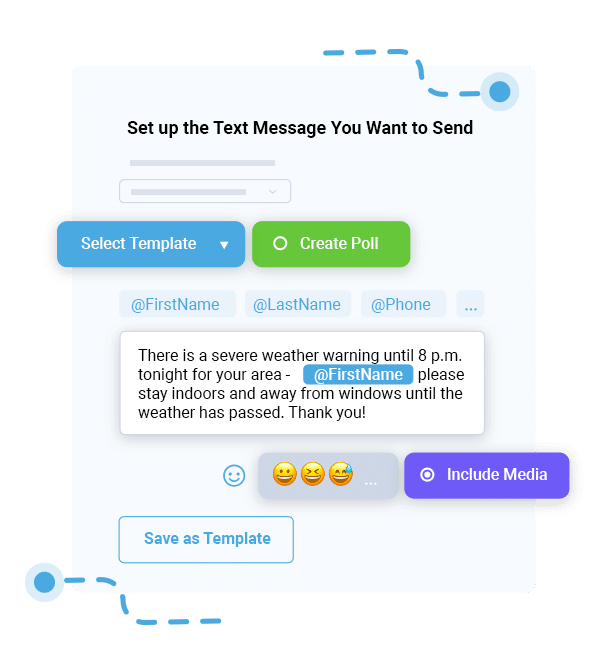
With DialMyCalls, schools can save and customize message templates in advance, ensuring every alert sent during a crisis is clear, consistent, and accurate – even under pressure. The platform’s simple interface lets school districts send pre-tested messages instantly, reducing stress and avoiding confusion during critical moments.
Challenge #4 – System Overload or Failure During Peak Times
The Problem
During large-scale emergencies, communication traffic spikes instantly. Everyone – administrators, teachers, parents, and district staff – tries to send or receive updates at the same time. Traditional, on-premise systems often can’t handle that sudden surge, causing delays, incomplete message delivery, or total system crashes. In those moments, when communication matters most, schools are left in the dark.
The Causes
These failures are most of the time caused by the limited capacity of the system or the dependence on the local infrastructure. If the software is on-premise, it is reliant on the school’s internal servers and internet connection; consequently, they can be overloaded very quickly or be out of service during a power cut or a regional crisis. There are also some outdated systems that have not been designed with redundancy or backup channels to be able to guarantee the delivery of messages when there is a sudden increase in demand.
The Solution
The best way to prevent breakdowns is to switch to cloud-based emergency notification systems. In fact, cloud platforms can manage tens of thousands of simultaneous notifications without any delays or service interruptions since they are designed to scale automatically. Besides, they are equipped with redundancy by default, which means that if a particular part of the network is affected by a problem, there will still be other parts through which the messages can be sent. Cloud-based systems that align with IPAWS and FCC standards ensure reliability and compliance during large-scale emergencies.
It is highly recommended for schools to conduct frequent tests of their systems and, therefore, ascertain their trustworthiness. Moreover, they will be able to establish support lines, for instance, SMS-only or voice messages, in the event that a certain channel disappears. Such a multi-layered strategy is a guarantee of communication continuity even during crises.
DialMyCalls Insight
With DialMyCalls, schools never have to worry about system overload. Its cloud reliability guarantees consistent message delivery across SMS, voice, and email – even during high-volume events. Schools can send thousands of messages in seconds, confident that every alert reaches its destination, no matter how busy the network gets.
Challenge #5 – Lack of Two-Way Communication and Feedback
The Problem
Many school emergency systems lack a significant feature, which is the ability to get feedback. It is only half the work to send out the alerts – the real work is to know who got, read, or acted on the alerts. If there is no two-way communication, school administrators have no way of knowing whether the staff is safe, parents have got the instructions, or students have been evacuated.
The Causes
The majority of legacy systems function as one-way broadcasters. In such systems, messages are sent out, but there is no provision for acknowledgment or response tracking. As a result, this situation creates loopholes in the chain of accountability, and the staff are compelled to use manual follow-ups, such as phone calls or headcounts, to check that these messages have been received. In the absence of on-the-spot confirmation, the pace of decision-making is reduced and it becomes more challenging to coordinate the responses.
The Solution
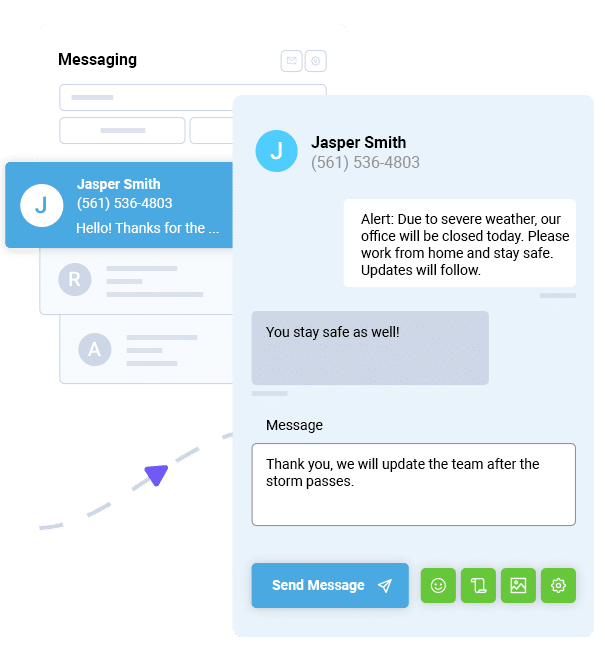
Modern emergency communication requires two-way alerts that enable the recipients to reply directly. For instance, messages can have very basic response options like “Reply SAFE if you’re secure” or “Reply HELP if you need assistance.” In this way, administrators can see immediately who has confirmed the alert, which supports them in directing assistance to the place where it is most needed.”
To strengthen oversight, schools should enable message tracking and reporting features that log delivery times, response rates, and follow-up actions. Integrating these insights with existing school databases or safety dashboards ensures all records are stored for compliance and post-incident review.
DialMyCalls Insight
With DialMyCalls, schools can go beyond one-way alerts. Its two-way messaging and reporting tools make it easy to confirm message receipt, gather safety updates, and keep a clear record of every communication. Whether it’s a safety drill or a real emergency, administrators gain the visibility they need to respond fast and confidently.
Challenge #6 – Compliance and Documentation Gaps
The Problem
After an emergency, schools often face the task of demonstrating that they have effectively communicated during the incident. Regardless of whether it is for audits, insurance claims, or safety reviews, the school management team needs to provide evidence in the form of thorough records indicating the time of sending the alerts, the recipients of these alerts, and the response of the school. In the absence of suitable documentation, situations that have been handled in a good manner may be perceived as chaotic, or in violation of regulations.
The Causes
Many schools still depend on manual record-keeping like spreadsheets, call logs, or paper notes. These methods are prone to human error, missing entries, or data loss. Other systems may not automatically track sent messages, making it difficult to reconstruct communication timelines. This becomes especially risky under regulations like FERPA (which governs student data privacy), OSHA (workplace safety), and state-specific school safety laws.
The Solution
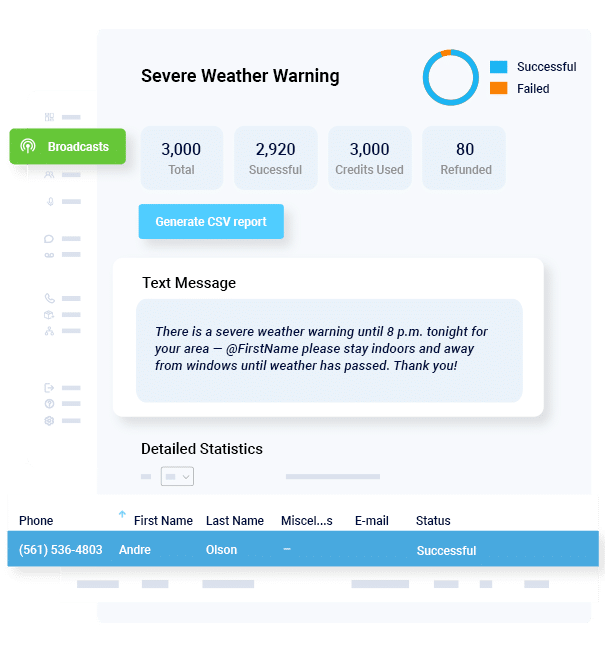
To close these gaps in school safety compliance, schools need to implement notification systems that have reporting and audit logs as an integral part. Such systems automatically save communication history, time stamps, lists of recipients, and confirmations of delivery – thus, they represent a full record of communication that can be used for checking compliance or for an investigation.
It is also crucial that the selected platform complies with privacy and safety standards, including data encryption, secure access provision, and regional compliance requirements. Besides, schools should organize regular inspections to make sure that safety communications are in accordance with the set standards at the federal and local levels.
DialMyCalls Insight
DialMyCalls simplifies compliance with automated reporting and full message logs. Every alert – from a weather delay to a lockdown – is documented in real time, giving schools a verifiable trail of their emergency communications. That transparency not only helps with regulatory reviews but also builds trust with parents, staff, and the wider community.
Bonus Challenge – Communication Fatigue / Alert Overload
The Problem
Even the most reliable alert system can lose effectiveness if it’s overused. When staff, students, or parents receive too many notifications – especially for minor issues – they start tuning them out. This “alert fatigue” means truly urgent messages risk being missed when they matter most.
The Solution
Schools can prevent fatigue by implementing clear alert tiers. For example:
Tier 1: Critical emergencies (lockdowns, active threats, severe weather alerts).
Tier 2: Urgent but non-life-threatening updates (power outages, early dismissals).
This structure in crisis communication helps recipients understand the urgency at a glance. Next, schools must also adjust the frequency of their alerts to the needs of the individuals. It is not necessary that each message be sent to every recipient. Parents may be only given the overview of the situation, whereas the staff members can be informed via a more frequent internal notice. Dividing the recipients into groups lessens the noise and keeps the focus where it is most needed.
Finally, inform your community about the use of the alert system. Ensure that everyone understands what each type of message signifies and why it is necessary to be constantly aware. A short annual refresher during orientation or safety week helps reinforce awareness.
DialMyCalls Insight
DialMyCalls helps schools balance communication volume with impact. With custom audience groups and multi-tier alerts, administrators can send the right message to the right people – without overwhelming their inboxes. That keeps critical alerts visible and trusted, even in a busy digital world.
How Schools Can Future-Proof Their Emergency Communication
Emergencies evolve, and so should your school’s communication strategy. To stay ahead of future risks, schools need systems that are not just reactive but adaptive, ensuring fast, accurate outreach even as technology, staff, and safety protocols change.
The key is investing in tools built for integration, scalability, and automation. Your emergency notification platform should connect seamlessly with student information systems, scale with enrollment, and automate repetitive tasks like message delivery or contact updates. This ensures communication stays reliable during both routine drills and real crises.
Modern, mobile-first, and cloud-based platforms like DialMyCalls make this possible. They remove on-premise limitations, support thousands of recipients, and ensure continuity even if local systems go down. Schools can send alerts from anywhere – whether on campus or off-site – using a simple, secure dashboard.
Here’s a quick checklist to guide your upgrade plan:
Multi-channel delivery: Reach everyone via SMS, voice, and email simultaneously.
Two-way acknowledgment: Confirm who’s safe or needs help.
Automated templates: Save time during high-stress situations.
Compliance tracking: Maintain transparent records for audits and accountability.
By adopting a scalable, integrated system now, schools can reduce future risks, improve safety outcomes, and communicate with confidence – no matter what the next emergency brings.
Keep Everyone Connected & Informed
Get the Word Out Quickly with Bulk Texting and Voice Calls
At the heart of every safe school is clear, rapid communication. When emergencies strike, it’s not just about sending a message – it’s about reaching the right people, at the right time, with the right information.
Most of the challenges schools face today – from delayed alerts to compliance gaps – stem from outdated systems, fragmented contact lists, or manual processes that can’t keep up with modern demands. The solution isn’t to add more tools. It’s to choose one system that does it all – automated, reliable, and built for education environments.
With DialMyCalls, schools gain a unified communication platform that delivers instant SMS, voice, and email alerts while maintaining transparency and compliance. Whether it’s a weather delay, a safety lockdown, or a routine schedule update, you can keep parents, staff, and students informed in seconds.
Discover how DialMyCalls helps schools eliminate communication gaps and protect every minute when it matters most. Try it free today.
Emergency Notification FAQs
What are the biggest emergency communication challenges schools face today?
Common issues include delayed notifications, unclear messaging, outdated contact lists, and system overload during major incidents. Many schools also struggle with maintaining compliance and ensuring accountability across large districts.
How can schools improve the speed and reliability of emergency alerts?
Adopting automated, cloud-based systems like DialMyCalls allows messages to be sent across SMS, voice, and email channels simultaneously. Pre-approved templates and system testing also ensure alerts go out fast and without errors.
Why do school emergency notification systems fail during crises?
Failures often happen when schools rely on on-premise systems with limited capacity or outdated software. Cloud-based tools prevent downtime by supporting high message volumes even under heavy demand.
How often should schools test their emergency communication systems?
At least once per quarter. Regular testing ensures all contact information is current, system integrations are working, and staff know how to use the alert platform under pressure.
What features should schools look for in a reliable emergency notification system?
Look for multi-channel messaging, two-way acknowledgment, compliance tracking, automated templates, and mobile accessibility. These ensure both speed and accountability in real-world emergencies.
How can schools ensure parents, staff, and students all receive alerts at the same time?
Use a platform that supports multi-channel delivery and dynamic contact grouping. DialMyCalls sends alerts via SMS, voice, and email simultaneously, guaranteeing everyone receives critical updates regardless of their device or location.
Instant Communication, Whenever You Need It
Send Real-Time SMS & Voice Call Alerts from Anywhere
Ryan Betancur is an Emergency Management Planner at Hagerty Consulting and a proud US Army veteran. Drawing on years of experience, he specializes in healthcare and critical infrastructure emergency management, strategic planning, and business continuity. Ryan has been on the front lines managing COVID-19 responses in New Jersey and Illinois and supporting NYC's Migrant Crisis response. He holds a master's degree in Homeland Security and Emergency Management and multiple certifications in emergency preparedness.
“I am a youth minister and have spent hours in the past calling students individually to remind them of an upcoming event or to get out an urgent announcement. With DialMyCalls.com, I cut that time down to about 1 minute. I also love how I can see exactly who answered live and how long they listened so I know if they heard the whole message. DialMyCalls.com is the best website I have stumbled upon all year! Thanks!”
Real Results, Real ReviewsOver 40,000 customers trust our platform – and it shows.
4.3
502 Reviews
4.7
836 Reviews
Author
Ryan BetancurEmergency Management Planner
Ryan Betancur is an Emergency Management Planner at Hagerty Consulting and a proud US Army veteran. Drawing on years of experience, he specializes in healthcare and critical infrastructure emergency management, strategic planning, and business continuity. Ryan has been on the front lines managing COVID-19 responses in New Jersey and Illinois and supporting NYC's Migrant Crisis response. He holds a master's degree in Homeland Security and Emergency Management and multiple certifications in emergency preparedness.
“I am a youth minister and have spent hours in the past calling students individually to remind them of an upcoming event or to get out an urgent announcement. With DialMyCalls.com, I cut that time down to about 1 minute. I also love how I can see exactly who answered live and how long they listened so I know if they heard the whole message. DialMyCalls.com is the best website I have stumbled upon all year! Thanks!”
Fill out the form below to get a fast custom pricing quote specific for your
organization.Want to speak to our sales team now? Call us at
1-800-928-2086
Thank you!
A representative will be reaching out to you soon.
For immediate help you can call us on
800-928-2086.
Try Out DialMyCalls Now?
Enter a new password and click create account and you'll be able to send 25 test messages now.
Send A Sample Broadcast
We'll send a sample call or text to your phone right now. Remember when you use DialMyCalls you can record your message in your own voice. When the phone rings just pick up and say "Hello" to hear the message.